
Camp Info
| Ages: | 15–18 |
| Type: | Day |
| Gender: | Co-Ed |
| Setting: | City |
| Academics: | Academics, Science, Career, Medicine |

Auburn, AL, USA
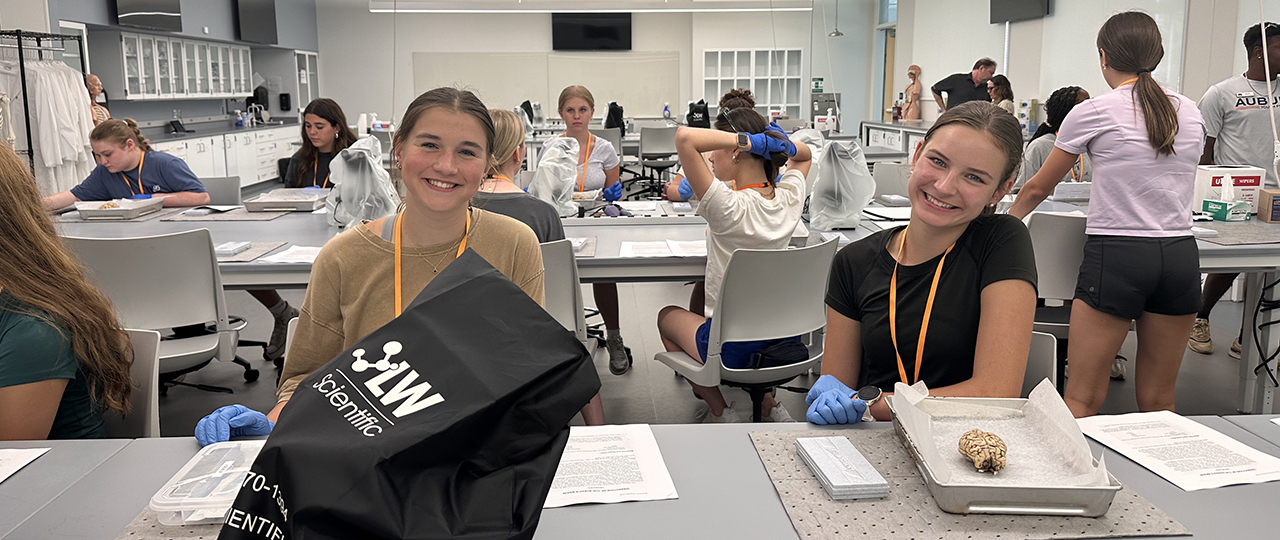
Brain Camp is an educational day camp created to engage children who enjoy asking questions, experimenting, and discovering how things work. The atmosphere is energetic, encouraging, and intellectually stimulating, with a strong focus on interactive learning rather than traditional classroom instruction. Campers are introduced to basic neuroscience concepts through age-appropriate activities that combine science, creativity, and movement.
The camp stands out for its hands-on approach to learning about the brain and human behavior. Activities are designed to make complex ideas accessible and fun, allowing children to explore topics such as perception, memory, senses, and decision-making through games, experiments, and group projects. Learning is guided by experienced instructors who encourage curiosity, discussion, and collaboration.
Brain Camp is especially well suited for elementary and early middle school children who are naturally curious and enjoy science-based activities. Younger campers benefit from simple experiments and playful exploration, while older campers enjoy deeper discussions and more advanced problem-solving tasks. The program helps children build confidence in their thinking skills while fostering a love of science and discovery in a friendly, structured environment.
| Ages: | 15–18 |
| Type: | Day |
| Gender: | Co-Ed |
| Setting: | City |
| Academics: | Academics, Science, Career, Medicine |
You won’t be charged yet. The camp will contact you to confirm all terms first.
| Dates | Days | Price | Apply |
|---|---|---|---|
| Jul 13 - Jul 17, 2026 | 5 | $750 |
The Brain Camp activities program is designed to introduce children to neuroscience concepts through interactive, hands-on learning. Each day combines short lessons with experiments, games, and group discussions that help campers understand how the brain influences thoughts, movement, emotions, and behavior. Activities are structured to encourage curiosity and active participation rather than passive learning.
Campers explore scientific ideas through demonstrations and creative challenges that make abstract concepts tangible. Group activities promote teamwork and communication, while individual tasks allow children to test ideas and build confidence in their thinking skills. The program balances focused learning with movement and fun to keep campers engaged throughout the day.
By presenting science in an approachable and exciting way, Brain Camp helps children develop critical thinking skills and a positive attitude toward learning. The supportive environment encourages questions, experimentation, and creativity.
Brain Camp operates as a day camp, and overnight accommodations are not provided. Campers attend daily sessions and return home at the end of each day. This format makes the program ideal for families seeking an academically focused camp experience without residential stays.
During the day, campers use designated classrooms, labs, or activity spaces suited for educational programming. These areas provide seating, work surfaces, and access to materials needed for experiments and group projects. Indoor spaces allow for focused learning, while movement-based activities may take place in open or shared areas.
The day camp structure supports a comfortable routine, especially for younger campers or those attending academic camps for the first time. Children receive a whole camp experience while maintaining the familiarity of home each evening.
Meals are not provided in full as part of Brain Camp. Campers are generally expected to bring their own packed lunch and snacks each day. This allows families to accommodate dietary needs, preferences, and food sensitivities.
Meal times are scheduled and supervised by camp staff to ensure a safe and organized environment. Campers eat together in designated areas, promoting social interaction and relaxation between activities. Staff members encourage good hygiene practices such as handwashing before meals and proper cleanup afterward.
Parents are typically advised to pack clearly labeled lunches, snacks, and water bottles. Foods that are easy to manage without heating or refrigeration are usually recommended. Regular snack and lunch breaks help campers stay energized and focused throughout the day.
Safety is a key priority at Brain Camp. Campers are supervised at all times by trained instructors and staff experienced in working with children in educational settings. Group sizes are managed to ensure appropriate supervision and individual attention during activities.
All experiments and activities are designed to be age-appropriate and safe, using materials suitable for children. Staff members provide clear instructions before activities begin and closely monitor participation to ensure guidelines are followed.
Attendance is tracked throughout the day, and campers move between activities under staff supervision. Clear behavioral expectations are established to create a respectful and secure learning environment. These measures help ensure that campers can explore, experiment, and learn with confidence.
While Brain Camp does not emphasize formal camp traditions, it fosters meaningful routines that help campers feel connected and motivated. Daily group discussions, collaborative problem-solving, and shared discoveries create a strong sense of community among participants.
Campers often look forward to interactive demonstrations and group challenges that encourage teamwork and creative thinking. Celebrating successful experiments and sharing ideas with peers become natural traditions as the session progresses.
End-of-day reflections or group wrap-ups help campers recognize what they’ve learned and build excitement for the next day. These shared experiences create lasting memories and reinforce the joy of learning together.
Camp operates as a day program only.


