Accommodation
The Science Summer Camp takes place entirely on the Master’s University campus and operates as a day program. Students do not stay overnight.
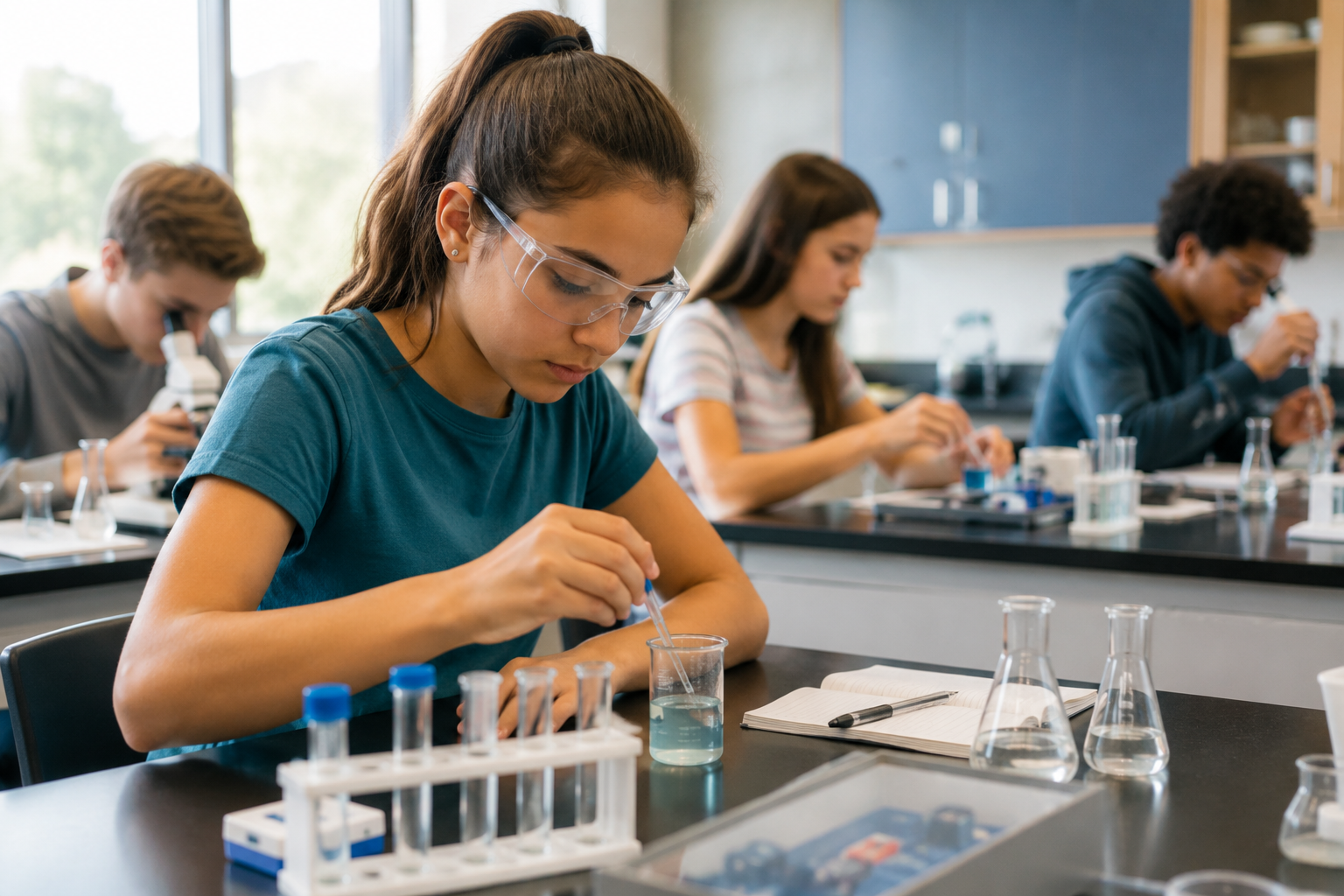
Campers spend their time inside active academic spaces — science labs, lecture rooms, and collaborative classrooms where university students normally study. The setting feels distinctly collegiate. Lab benches, scientific equipment, and structured work areas replace the typical camp craft tables.
The environment is intentionally academic. Students follow a planned schedule that moves between instruction, experimentation, and discussion. Being physically present on a working university campus helps teens imagine themselves in that future role. It’s not just a science camp — it’s a glimpse into real higher education.
Meals
Lunch is typically included and provided through the university dining service, Café Bon Appétit. Students also receive snacks and refreshments during the program day.
Meals are usually served in the campus dining area, giving participants a realistic taste of university life beyond the lab. This break allows students to recharge before returning to experiments and discussions.
If dietary restrictions or allergies are a concern, families should communicate those needs during registration so arrangements can be clarified in advance.
Safety
All scientific activities take place in supervised laboratory environments. Before beginning experiments, students receive clear instruction on lab conduct and equipment use.
Faculty and trained staff oversee all hands-on work. Procedures are explained step by step, and students are expected to follow directions carefully. Respect for materials, shared space, and peers is emphasized throughout the program.
University standards guide behavior expectations. The structured campus setting allows for organized movement between sessions and controlled access to instructional areas.
The goal is to create a focused academic atmosphere where students can experiment confidently while following established safety practices.
Health & Medicine
Families provide medical information during registration, including allergies or conditions that may affect participation in laboratory activities.
Students spend extended time in academic settings that require attention and careful coordination. Scheduled breaks allow time to rest and hydrate.
If medication must be administered during camp hours, arrangements should be discussed in advance with program staff.
Emergency contact information remains on file, and established university procedures guide response protocols if a health concern arises.
Camp Traditions
Master’s University has a longstanding academic and Christian heritage, and the Science Camp reflects that identity.
Students participate in Christian fellowship and devotional time during the week. Scientific topics are explored through the lens of Biblical truth, encouraging thoughtful reflection on how faith and discovery intersect.
A highlight of the experience is often the final presentation or lab showcase. Students explain experimental results, describe what they learned, and reflect on their discoveries. These moments strengthen both understanding and communication skills.
For many participants, the week feels like stepping into a larger academic legacy — engaging deeply with both disciplined study and spiritual conviction.