
Camp Info
| Ages: | 14–18 |
| Type: | Day, Overnight |
| Month: | Summer |
| Gender: | Co-Ed |
| Setting: | City |
| Lodging: | Dorm |
| Academics: | Academics, Liberal Arts, Psychology |


Berkeley, CA, USA
Psychology 9th–12th at UC Berkeley is designed for students entering grades 9–12 who want an introduction to the foundations of psychology in an active, relatable format. The course explores major topics such as personality, sensation and perception, memory, psychological development, self-understanding, relationships, and interactions with social groups. Rather than treating psychology as a list of theories to memorize, the program presents it as a way to better understand everyday behavior, decision-making, and human connection.
The teaching style appears especially accessible for teens because it blends academic ideas with activities and examples students can actually experience. The official program description highlights inversion goggles and optical illusions to explore perception, a taste lab to examine the chemical senses, and memory games that help students think about how memory works and how to improve it. Current events, stories, guided discussion, and “what if” scenarios are also part of the course, which should help the material feel more relevant and less abstract.
Another appealing feature is the way the program connects psychology to self-reflection. Campers explore personality theories to identify strengths, growth areas, and patterns in their current relationships, and are encouraged to consider how those insights could connect to future majors or career interests. This camp should appeal most to teens who enjoy human behavior, discussion-based learning, and social questions. It is a strong fit for students who want a science and social science experience that feels interactive, thoughtful, and closely tied to real life.
| Ages: | 14–18 |
| Type: | Day, Overnight |
| Month: | Summer |
| Gender: | Co-Ed |
| Setting: | City |
| Lodging: | Dorm |
| Academics: | Academics, Liberal Arts, Psychology |
You won’t be charged yet. The camp will contact you to confirm all terms first.
| Dates | Days | Price | Apply |
|---|---|---|---|
| Jun 28 - Jul 4, 2026 | 7 | $2,785 | |
| Jun 28 - Jul 4, 2026 | 7 | $3,285 |
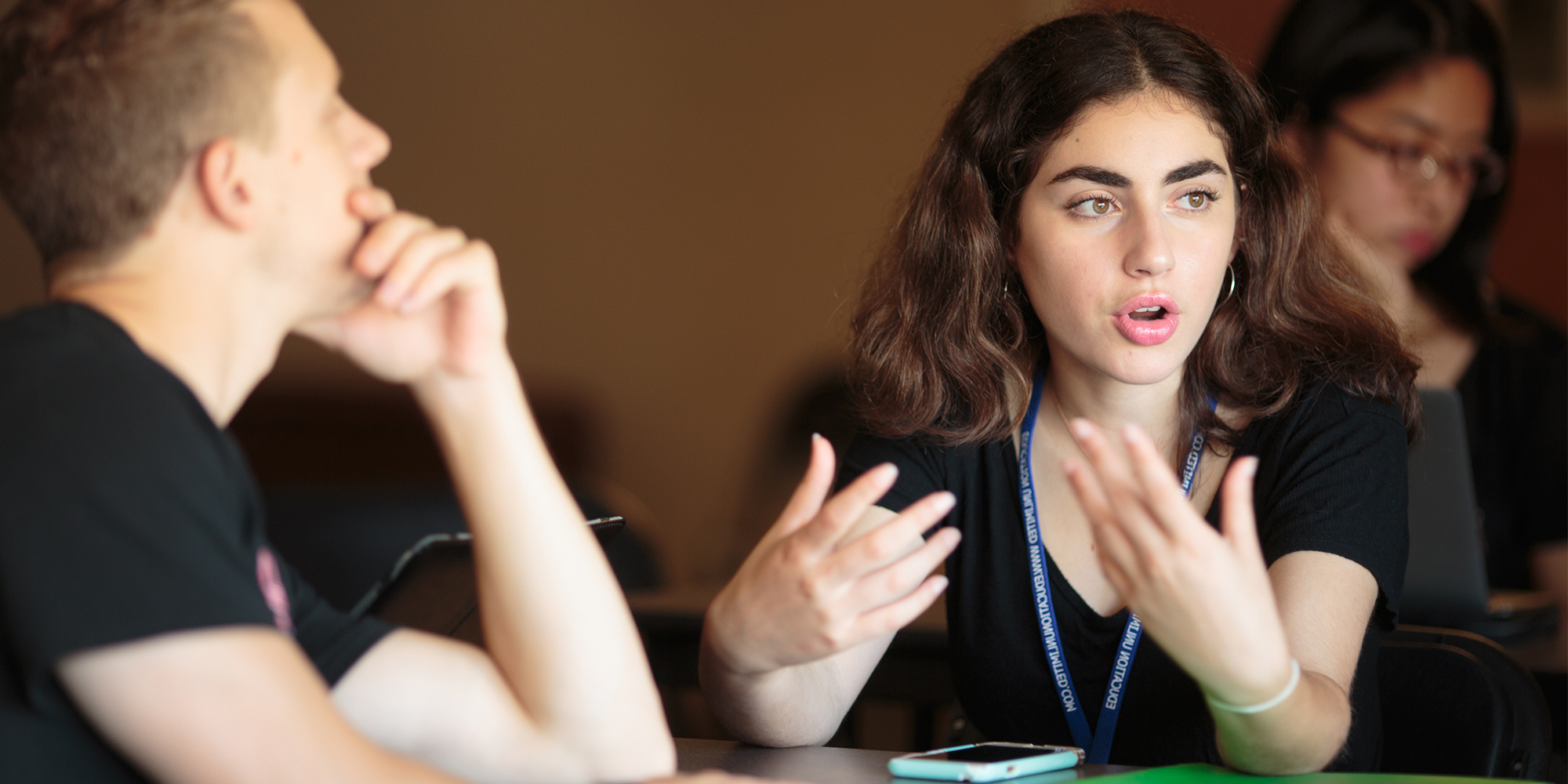
The program gives students an interactive introduction to psychology through experiments, demonstrations, discussion, and guided reflection. The course covers major foundations of psychology, including personality, sensation and perception, memory, stages of development, self-understanding, relationships, and the ways people interact in groups. Instead of treating these topics as separate textbook chapters, the camp ties them together through activities that help students connect ideas to real experiences.
Hands-on learning is one of the biggest strengths of the program. Students use inversion goggles and optical illusions to explore how the brain processes what we see. They take part in a taste lab to learn about chemical senses, and they use memory games and memory-building strategies to understand how recall works. These kinds of activities make the subject feel much more immediate and easier to remember.
The course also includes more reflective and discussion-based work. Campers explore personality theories to better understand themselves, their strengths, areas for growth, and current relationships. Stories, current events, guided discussion, and “what if” scenarios are used to apply social psychology concepts in ways that feel connected to everyday life.
Toward the end of the week, students also examine how technology and positive psychology have expanded our understanding of behavior and thought processes. The final project asks each camper to choose one of the concepts covered during the week and design and conduct a psychology experiment. That closing assignment gives the program a strong sense of purpose and lets students move from learning psychology to actually using it.
Students can attend this camp as extended day campers or overnight campers. The overnight option lets teens stay in campus student dormitories and remain part of the full rhythm of camp life, including meals, evening sessions, and recreation. Extended-day campers follow the same core academic schedule but return home at the end of the evening.
The housing setup is designed to be supervised and structured. Most rooms are doubles, so campers usually share with one other same-sex student. Students of the same gender can request to room together, although specific roommate and room-type requests are not guaranteed. The residence halls use secure key access, and the dorm floors are separated by sex.
Same-sex staff members live on the dorm floors with campers and provide evening supervision, while the Camp Director and Assistant Director also remain on site in the dormitory during camp. That arrangement gives students a taste of campus living while still keeping the residential side of the program organized and closely supervised.
Meal coverage depends on how a student attends. Overnight campers receive breakfast in the dining hall, and lunch and dinner are included for both overnight and extended day campers. That means extended-day students remain part of the full daily flow rather than heading home before the later parts of the schedule begin.
This setup works well for a camp with a long and varied day. Students move from camp meeting and warm-up into class, lunch, recreation, another class block, dinner, and evening sessions. Meals help the day feel continuous and make it easier for students to stay connected both socially and academically.
For dietary restrictions or food allergies, families need to coordinate directly with campus dining services. The program can connect families with the appropriate contact. The official information states that the campuses can generally accommodate many common dietary restrictions and allergies, which should cover a broad range of routine needs.
The camp uses a structured supervision model across both academic and residential time. Education Unlimited says its camps average about a 1:12 instructor-to-student ratio over the summer, with about one adult for every ten campers overall. That helps keep the learning environment interactive while still maintaining visible adult oversight.
For overnight campers, supervision continues after class hours. Same-sex staff members live in the same dormitory hallways as the students, and roll calls are taken each morning, before meals, and before classes or activities. The evening routine includes two separate checks, followed by a room check. After room check, campers are expected to stay in their rooms except for emergencies or necessary restroom visits on their floor.
Because this is a high school program, students may sometimes walk between the dorms, dining hall, and classes without an adult directly beside them, but they are expected to be in groups of at least three. Staff background checks are conducted at hire and then annually. Altogether, the program appears to offer a balance of independence and structure that fits a residential high school camp well.


