
Camp Info
| Ages: | 11–18 |
| Type: | Day, Overnight |
| Month: | Summer |
| Gender: | Co-Ed |
| Setting: | City |
| Lodging: | Dorm |
| Academics: | Academics, Career, Life Skills, Debate, Public Speaking |

Washington, DC, USA
Public Speaking Institute for high school students is designed to help students in grades 9–12 build confidence in public speaking through an interactive curriculum focused on logic, rhetoric, and steady skill development. The program includes three main components during the week: Debate, Persuasive Speaking, and an elective. That structure gives the camp a nice balance. It is not only about arguing, nor is it only about speech delivery. Students get both.
The debate portion teaches students how to construct persuasive positions, attack and defend arguments, and cross-examine effectively. Students debate age- and experience-appropriate topics, work in teams, and practice verbal strategy in live exchanges. The persuasive speaking side is more focused on speech construction and delivery. Campers begin with prewritten speeches to learn timing, intonation, and delivery, then move on to creating their own speeches based on personal interests. They learn how to choose topics, build engaging introductions, organize ideas clearly, and deliver strong conclusions in a natural voice with few or no notes.
Evening electives add range to the program. Students may choose activities such as Model Congress, Negotiations, Reader’s Theater, or Improvisational Speaking. This camp should appeal most to teens who want to become stronger communicators, especially students who enjoy discussion, performance, persuasion, or leadership. The Georgetown setting adds another layer, as students experience campus life while spending the week in a program focused on active speaking practice.
| Ages: | 11–18 |
| Type: | Day, Overnight |
| Month: | Summer |
| Gender: | Co-Ed |
| Setting: | City |
| Lodging: | Dorm |
| Academics: | Academics, Career, Life Skills, Debate, Public Speaking |
You won’t be charged yet. The camp will contact you to confirm all terms first.
| Dates | Days | Price | Apply |
|---|---|---|---|
| Jul 12 - Jul 18, 2026 | 7 | $2,550 | |
| Jul 12 - Jul 18, 2026 | 7 | $2,985 | |
| Jul 12 - Jul 17, 2026 | 6 | $1,770 | |
| Jul 12 - Jul 17, 2026 | 6 | $1,995 | |
| Jul 12 - Jul 17, 2026 | 6 | $2,495 |

The program is organized around three main parts: Debate, Persuasive Speaking, and an elective. That structure gives students repeated speaking practice in different formats instead of limiting the week to a single style of communication. The curriculum is designed to encourage incremental progress through ongoing practice and exercise.
In Debate, students learn how to construct persuasive positions, challenge opposing arguments, defend their own ideas, and cross-examine effectively. They debate age- and experience-appropriate topics, work in teams, and practice verbal strategy in live exchanges. Past topics have included climate change, U.S. military adventures, and the legal drinking age.
In Persuasive Speaking, students first work with pre-written speeches to build timing, delivery, and intonation. Once they become more comfortable, they start creating speeches based on their own interests. They learn topic selection, introductions, organization, and compelling conclusions, with an emphasis on speaking naturally and using few or no notes.
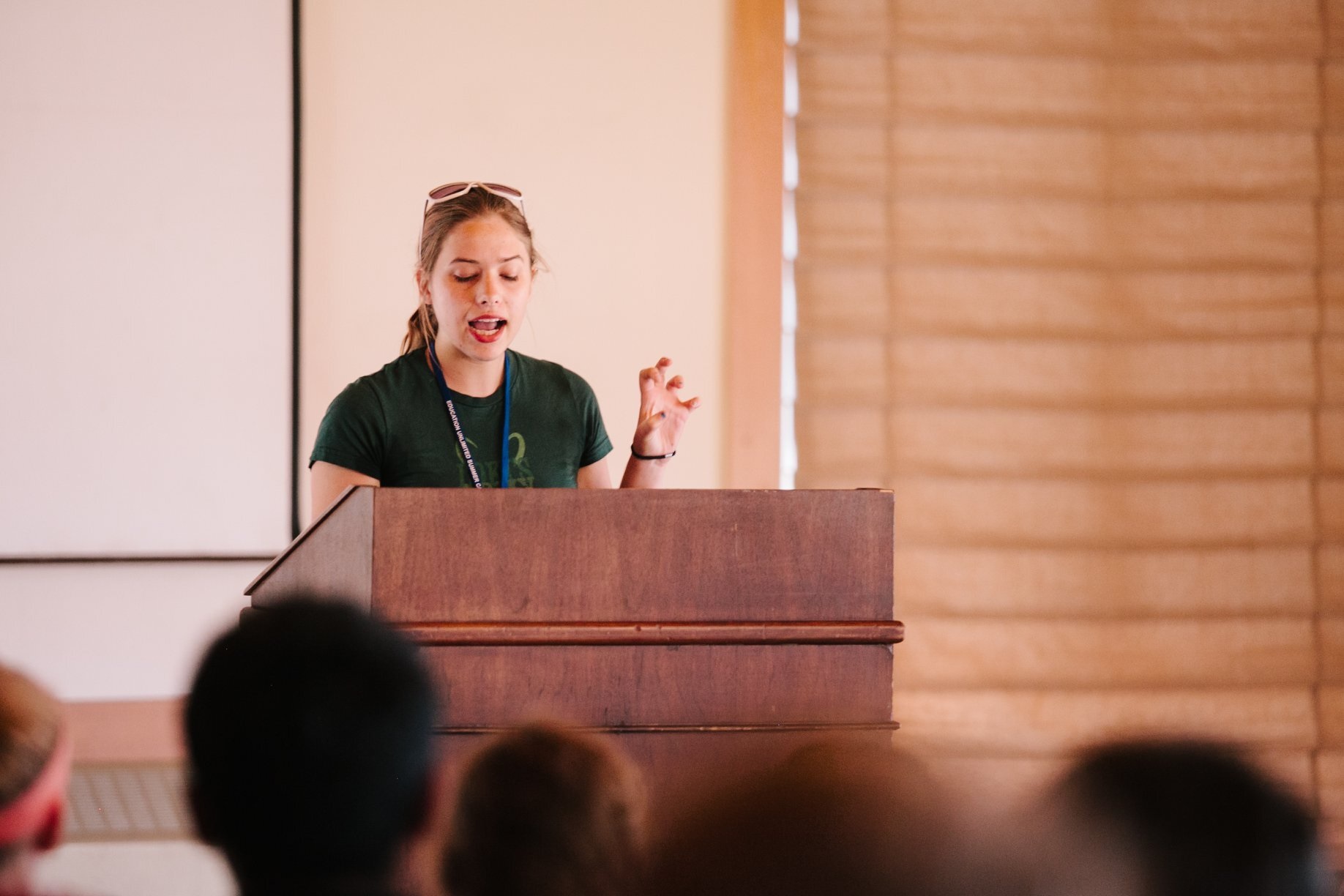
Evening electives expand the experience. Students may choose from Model Congress, Negotiations, Reader’s Theater, and Improvisational Speaking. These options let campers try different forms of public speaking, from diplomatic role-play and compromise to theater-based performance and quick-thinking speeches with limited prep time. The week ends with each student presenting a speech before a large group of fellow campers.
Students in the Georgetown high school program can attend as extended day campers or overnight campers. The overnight option gives teens the chance to live on campus during the week and experience more of the full daily rhythm of camp life. Extended-day campers still follow the same instructional and recreational schedule through the evening, but they do not sleep on campus. The commuter option for high school camps generally runs from about 9:00 a.m. to 9:00 p.m. each day, except on check-in and check-out days.
Overnight campers live in student dormitories. A large majority of rooms are doubles, so campers usually share with one other same-sex student. The dorms are described as secure, and students need a room key to access the exterior doors and the interior of the building. Dorm floors are separated by sex, and same-sex camp staff live on the floors with campers to provide supervision in the evening and overnight. The Camp Director and Assistant Director also remain on site in the dormitory during camp.
For students who want the fullest college campus experience, the overnight format offers more time with peers and a stronger residential feel. For students who want the same speaking curriculum without sleeping away from home, the extended day option still covers the core program.
Meal coverage depends on the attendance format. For high school camps, extended day tuition includes lunch and dinner in the dining hall. Overnight campers live on campus and experience campus dining during the week; residential fees cover all meals. That means students in both main attendance options stay fully woven into the day rather than leaving campus mid-schedule.
This setup fits the program's structure well. Public Speaking Institute is built around classes, practice, electives, and evening activities, so shared meals help the day feel continuous. Students move from speaking instruction into meals and then back into later sessions, which also adds more informal social time with other campers. The program specifically notes that students experience campus dining as part of university life during the week.
For food allergies or dietary restrictions, families need to coordinate directly with campus dining services. The camp can connect families with the appropriate contacts, and the campuses are generally able to accommodate many common dietary restrictions and allergies.
Education Unlimited says its summer programs average about a 1:12 instructor-to-student ratio, which helps keep classes interactive while still maintaining visible supervision. The program also places residential supervision directly into dorm life. Same-sex staff members live on the dorm floors with campers, and the Camp Director and Assistant Director remain on site in the dormitory during camp.
The camp uses clear routines for accountability. Roll calls are taken each morning, before each meal, and before each class or activity, with two additional checks each evening. These procedures matter in a campus-based program where students move between housing, dining, and academic spaces across the day.
Because this is a high school program, students may sometimes move between the dorms, dining hall, and classes without an adult directly beside them, but the official policy says they must be in groups of at least three. The organization also says it conducts background checks on employees at hire and annually after that. Overall, the safety structure appears to balance age-appropriate independence with regular supervision and clear boundaries.
Families are asked to report medications and special medical needs on the camp medical form before the session begins. Education Unlimited states that it uses educational facilities with nearby medical clinics and hospitals, but it does not have a nurse on site at its programs. For some families, that will be an important point to weigh in advance.
The medication process is clearly structured. In general, non-rescue medications are stored in the camp office. Students go there at the appropriate times to self-administer them. The program asks families to send only medications the student actually needs during camp, and all medications should remain in original bottles clearly marked with the student’s name and dosage.
Rescue medications such as inhalers and EpiPens should stay with the student at all times. The camp also asks families to send a second backup set of rescue medications to be stored in the camp office in case the first set is misplaced. The program notes that special accommodations may sometimes be possible outside the standard policy, so families with more complex medical needs should contact the office directly before camp begins.
A deposit is required at application, and once an application is received, money paid is generally nonrefundable unless the Tuition Protection Plan is purchased upon initial application.
A $300 security deposit is required for all campers to complete registration.
The Tuition Protection Plan provides a refund for eligible cancellations made in writing before the start of the program, but not for the premium itself.
Most dorm rooms are doubles, but no particular room configuration is guaranteed.
If a university adds a vaccination requirement, students who cannot provide proof may be unenrolled and given camp credit for a future Education Unlimited program.


