
Camp Info
| Ages: | 5–18 |
| Type: | Day |
| Gender: | Co-Ed |
| Setting: | City |
| Technology: | Technology, Robotics, Engineering, Lego, STEM, Coding |
| Meals Type: | Bring Your Own |
| Time: |
|
| Staff to Сamper Ratio: | 1:8 |

San Jose, CA, USA
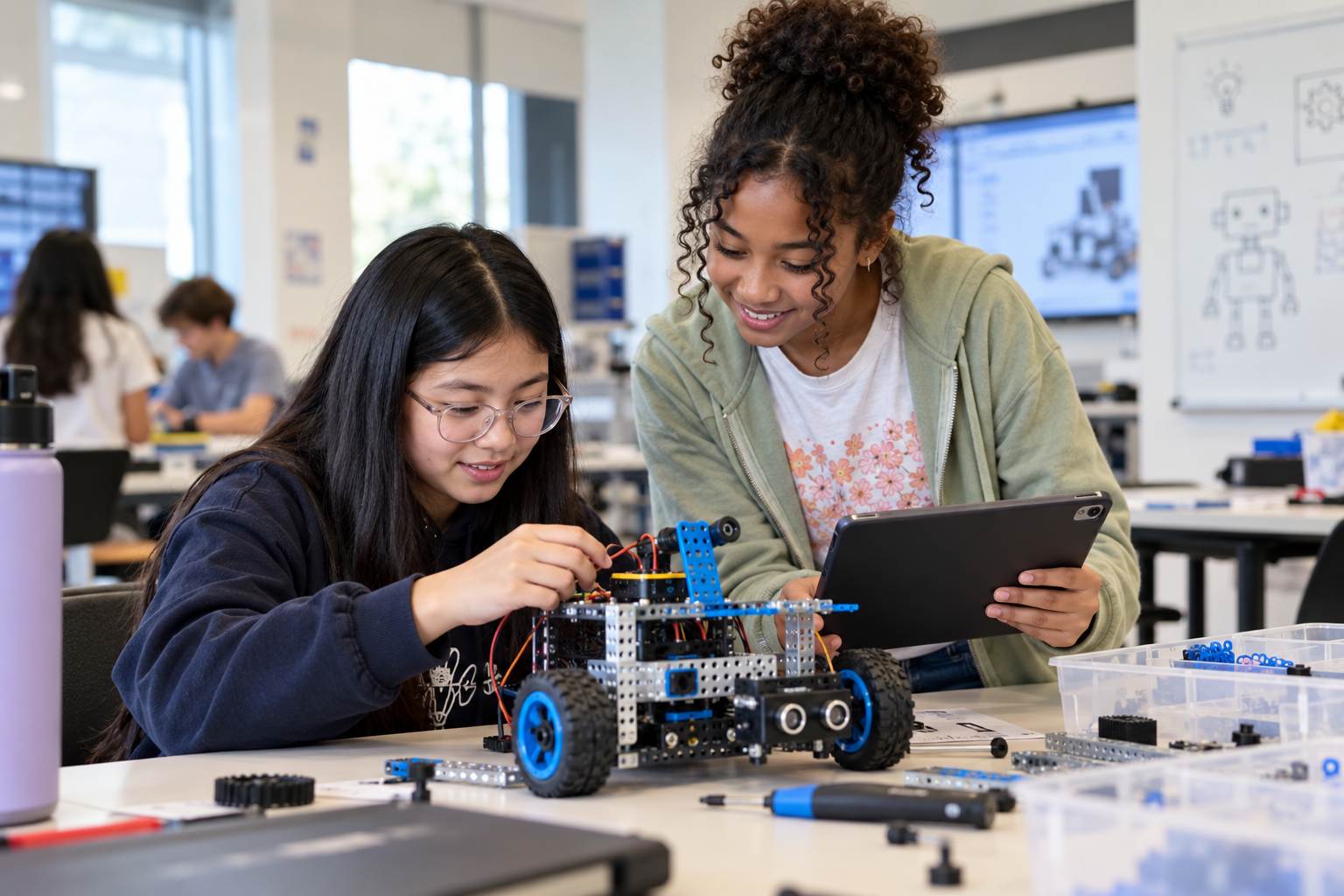
Building a robot is the focus of each day at Robolabs Camps San Jose. Campers begin with a short warm-up that introduces an idea or engineering concept, then move into hands-on construction, coding, and testing. Each student works on an individual robotics project suited to their experience, with group challenges adding chances to solve problems together. Rather than only watching demonstrations, participants learn through making changes to designs and seeing how their robots respond.
The main robotics camps serve students in grades 1 through 12. Younger and older learners use platforms selected for their age and skill level, including VEX IQ, FIRST LEGO League, and VEX V5. Projects explore mechanical design, programming, simple machines, gear ratios, and friction. Beginners can start with core building and coding ideas, while more experienced students receive projects that match their skills. A separate Battle Robots program for grades K–7 adds the challenge of building and testing robots for guided head-to-head competitions.
Camp sessions take place in an in-person robotics learning space in San Jose. Families can choose morning, afternoon, or full-day participation, with separate weeks during school breaks. The daily format combines focused project time, collaboration, and short breaks. This makes the camp a fit for children who enjoy building things, figuring out how mechanisms work, or taking their first steps toward competitive robotics.
| Ages: | 5–18 |
| Type: | Day |
| Gender: | Co-Ed |
| Setting: | City |
| Technology: | Technology, Robotics, Engineering, Lego, STEM, Coding |
| Meals Type: | Bring Your Own |
| Time: |
|
| Staff to Сamper Ratio: | 1:8 |
You won’t be charged yet. The camp will contact you to confirm all terms first.
| Dates | Days | Price | Apply |
|---|---|---|---|
| Nov 23 - Nov 25, 2026 | 3 | $417 | |
| Nov 23 - Nov 25, 2026 | 3 | $237 | |
| Nov 23 - Nov 25, 2026 | 3 | $237 | |
| Dec 21 - Dec 24, 2026 | 4 | $556 | |
| Dec 21 - Dec 24, 2026 | 4 | $316 | |
| Dec 21 - Dec 24, 2026 | 4 | $316 | |
| Dec 28 - Dec 31, 2026 | 4 | $556 | |
| Dec 28 - Dec 31, 2026 | 4 | $316 | |
| Dec 28 - Dec 31, 2026 | 4 | $316 |
Each regular camp week is a self-contained robotics experience. Students can attend one week or several, with morning, afternoon, and full-day options. A typical day starts with a brief warm-up activity or worksheet to introduce a concept before campers begin individual robotics projects and group challenges. A short break is built into each session, and the full-day option includes a midday lunch break. Instructors assess participants' experience and select projects that fit their current skills.
Robotics work is organized around building a working machine and understanding why it behaves as it does. Campers explore mechanical design and programming with age-appropriate platforms. VEX IQ introduces plastic building systems and block-based or text-based code; FIRST LEGO League uses LEGO-based robots; and VEX V5 offers metal construction, sensors, and text-based programming for older learners. Students practice testing, adjusting, and refining what they build, with the goal of completing a functioning robot during camp.
The separate Battle Robots program focuses on designing and building competition-ready robots. Students in kindergarten through seventh grade learn engineering ideas through guided robot battles, strategic design decisions, and teamwork. Beginners can participate without prior robotics experience, while returning students can take on more advanced challenges. Across both programs, the emphasis stays on making, experimenting, and learning through real robot projects.
Half-day campers should bring a snack and water bottle. Full-day campers should bring lunch, a snack, and a water bottle. The full-day schedule includes a lunch break from 12:00 PM to 12:30 PM.
Campers can use breaks for snacks or quiet activities such as reading, drawing, or free building. Books or drawing supplies may be brought from home for these breaks.
Camp sessions maintain a published maximum of eight students per instructor. In the separate Battle Robots program, participants build robots and take part in instructor-guided battles. The program uses a guided, competition-based learning format.
Robotics instructors guide students through building, programming, and engineering challenges. They assess each camper's prior experience and assign projects suited to the student's skill level. The published staffing limit is eight students per instructor. Battle Robots participants also receive instructor guidance while building and competing with their designs.
Morning camp runs from 9:00 AM to noon, afternoon camp from 12:30 PM to 3:30 PM, and full-day camp from 9:00 AM to 3:30 PM. Extended care is available from 3:30 PM to 6:00 PM for an additional hourly charge. Bring a water bottle and a snack for half-day participation; full-day campers should also bring lunch. Books or drawing materials are optional for quiet break time.


