
Camp Info
| Ages: | 6–11 |
| Type: | Day |
| Month: | Summer |
| Gender: | Co-Ed |
| Setting: | City |
| Arts: | Arts, Fine Arts, Arts & Crafts, Ceramics, Graphic Design, Photography, Dance |

San Diego, CA, USA
San Diego Art Camp is a multidisciplinary summer day camp for children ages 6 to 11. It is designed for kids who enjoy visual arts, movement, hands-on projects, and creative exploration in a group setting. The program runs as a full-day camp and combines studio-based art-making with outdoor learning in Balboa Park, giving the week a broader and more dynamic feel than a typical single-medium art class.
The atmosphere appears imaginative, busy, and variety-driven. Campers rotate through ceramics, painting and drawing, and photography every day, then spend time walking through Balboa Park for observation, inspiration, and guided visits to cultural spaces. Dance and music are also part of the program, adding movement and collaboration to a camp that is not limited to seated art-making. That mix is likely to appeal to children who enjoy creativity but do best when the day includes several different rhythms.
What makes this camp stand out is the combination of strong visual arts instruction and its setting. Balboa Park becomes part of the experience, not just the backdrop. Campers create in the classroom, work with clay, draw and paint, experiment with cameras, and then step outside to observe gardens, museums, and the surrounding artistic environment.
This camp is likely to be most appealing to children ages 6 to 11 who enjoy making things with their hands, noticing details, and exploring multiple creative disciplines in the same week.
| Ages: | 6–11 |
| Type: | Day |
| Month: | Summer |
| Gender: | Co-Ed |
| Setting: | City |
| Arts: | Arts, Fine Arts, Arts & Crafts, Ceramics, Graphic Design, Photography, Dance |
You won’t be charged yet. The camp will contact you to confirm all terms first.
| Dates | Days | Price | Apply |
|---|---|---|---|
| Jul 13 - Jul 17, 2026 | 5 | $585 | |
| Jul 20 - Jul 24, 2026 | 5 | $585 | |
| Jul 27 - Jul 31, 2026 | 5 | $585 |
The activities program is built around variety. Every day includes ceramics, painting and drawing, and photography, so campers do not spend the week focused on a single medium. That alone makes the camp feel broader than many art camps, especially for children who enjoy trying different materials and ways of creating.
Ceramics is one of the strongest hands-on parts of the program. Campers work with hand-building techniques such as pinch, coil, and slab methods, and they learn about shaping clay, joining wet sections, glazing, and firing. Because the camp runs for a short period, both traditional ceramic clay and self-drying clay are used so that projects can be completed within the week.
Photography adds a different kind of creative thinking. Campers use cameras from the first day and work on assignments both indoors and in the park. Topics include composition, portraiture, product and food photography, journalism, storytelling, optical illusions, and forced perspective. A photo booth is even set up in the classroom, which adds a more studio-like dimension to the week.
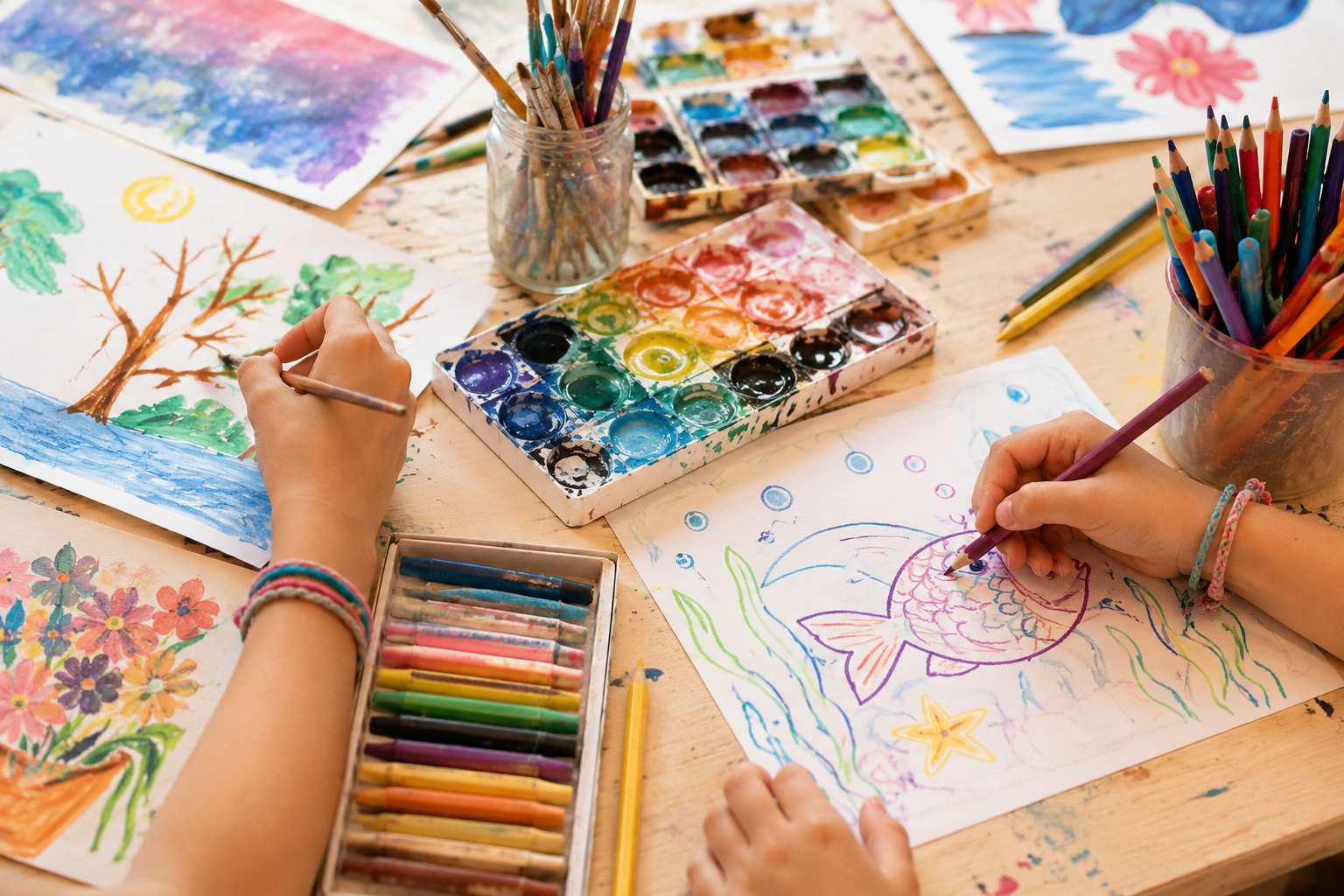
Painting and drawing round out the visual arts side of the program. Campers work with pencils, colored pencils, watercolor pencils, oil pastels, charcoal, watercolor, tempera, and collage while also learning about composition and modern art. Beyond the visual arts, dance and music are built into the week, and outdoor activities help keep the day active. The blend of classroom making, walking, observation, and performance gives the camp a lively, balanced feel.
This is a non-residential day camp. It runs as a full-day program, with no overnight component, dorm housing, or cabin-style stay. Families should expect a standard daily drop-off and pick-up format rather than a sleepaway camp structure.
The camp is based at an indoor art space connected to St. Paul’s Cathedral facilities, with additional daily time spent outdoors in Balboa Park. That means the camp environment combines classroom-based making with walking, outdoor observation, and visits to nearby cultural areas. The setup is more urban and arts-centered than nature-camp or sports-camp style.
Children are divided into two groups at the start of camp, and placement with a friend or sibling can be requested. That small operational detail suggests the camp is designed to keep the group experience manageable and flexible. The public information does not provide residential-style amenities or rest-space details, which is consistent with the camp’s day-only format.
Families should send lunch and snacks each day. There is no food available for purchase at the camp location, so the daily meal setup is entirely bring-from-home. Campers are also expected to bring a water bottle and other practical items needed for a day that includes both indoor work and outdoor walking.
The camp schedule includes a lunch break in the middle of the day and snack time during the morning and afternoon. That rhythm makes sense for a full-day program with both studio art and walking-based activities around Balboa Park.
A few food-related extras may come up during the week. Museum stores may be open during visits, and families can choose whether their child is allowed to purchase a snack there. If so, pocket money and permission are needed. At the end of camp, awards may be paired with ice cream, a small snack, or drinks, all individually pre-packed. Families with dietary restrictions are asked to share that information in advance.
The camp description presents the program as supervised and organized, with instruction taking place both indoors and outdoors. Children are split into two groups, and daily check-in and pickup take place in a designated courtyard. Pickup also requires a signed sheet, which adds a simple but useful layer of accountability at the end of the day.
There are several practical rules that support safe participation. Children are asked to wear comfortable shoes and bring sunscreen, a hat, and water for walking around the park. For ceramics, an extra T-shirt or apron is recommended because some art materials can get messy. Those details suggest the camp is thinking ahead about what children need for both comfort and safe movement throughout the day.
One of the clearest safety-related details is that all professional staff undergo background checks. That is an important point, especially for families choosing a camp that includes both indoor instruction and off-site walking within Balboa Park. The website does not publish camper-to-staff ratios or a detailed emergency plan, but the available information does show a structured check-in and supervision model.
Arrival should be no earlier than 15 minutes before camp starts
Pickup requires signing the pickup sheet
A late pickup fee is charged after the short grace period
Refunds are reduced by a processing fee if the camp is canceled by organizers
Family-initiated cancellations more than three weeks before camp receive a partial refund after a cancellation fee
No refund is available for cancellations made within two weeks of the start date
Rescheduling is not available


