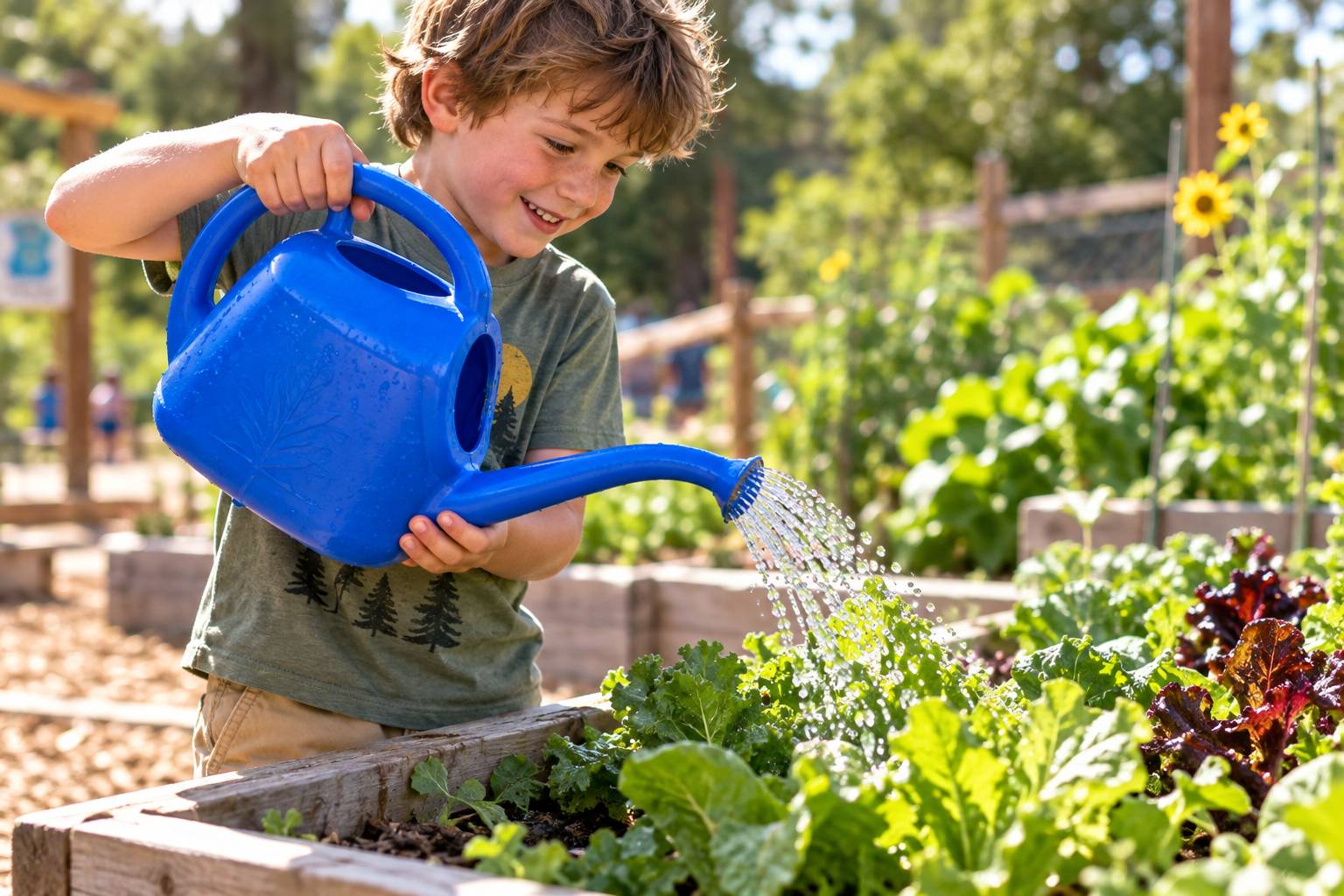
Summer is organized in two formats. The Summer Semester serves ages 3–6 across an eight-week program, with families choosing one to four attendance days per week. Children follow the weekly themes while building familiarity with the farm through exploration, harvest activities, nature science, crafts, and simple cooking projects.
The four-day camp series serves ages 4–10. Each Tuesday-through-Friday week has its own seasonal theme, such as planting, berries, pollinators, garden-to-kitchen learning, seeds, harvests, or melons. A typical day combines structured activities with free outdoor exploration. Campers may move between garden work, nature investigations, cooking, creative projects, walks, and games, with most of the experience taking place outside.
Across the wider Young Pioneers program, children are grouped by age and rotate through hands-on stations. The Web of Life curriculum connects agriculture and nature with science, math, language arts, art, music, cooking, homesteading, and practical skills. Summer activities use the same experiential, farm-based approach, giving children repeated opportunities to learn by doing.