Accommodation
Aventuras Forest School Summer Camp is a non-residential day camp. Campers attend during the day and return home afterward.
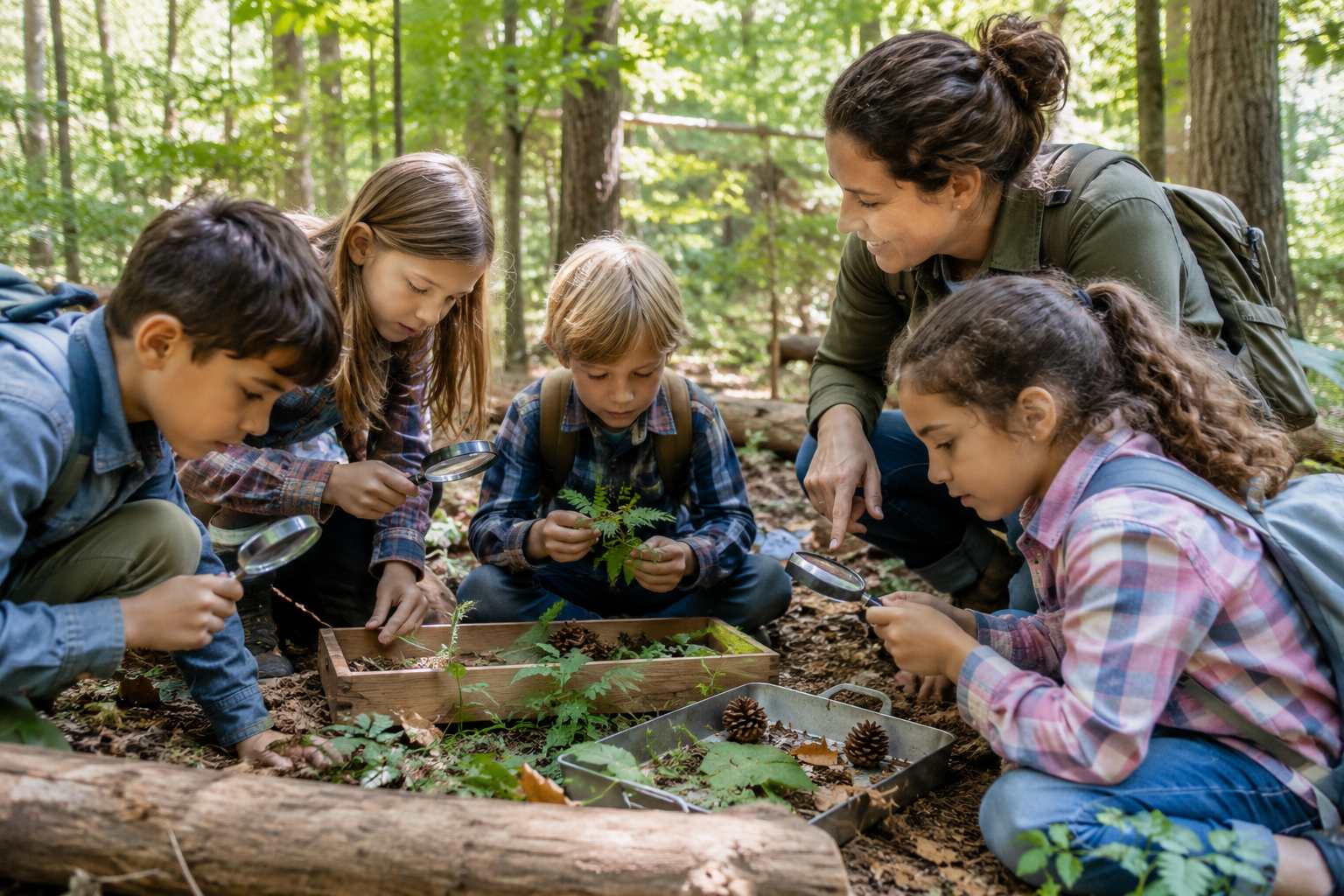
Most activities take place outdoors, with natural spaces serving as the primary learning environment. Children move between exploration areas and group gathering spots for activities, meals, and rest. The day-camp format offers flexibility while still providing a consistent, immersive experience.
Meals
Campers bring their own lunch and snacks each day. Families are encouraged to pack food that works well for outdoor days and meets their child’s dietary needs.
Safety
Safety at Aventuras Forest School Summer Camp is closely connected to readiness and group awareness. All children must be potty trained and able to follow basic safety expectations before attending camp. This includes staying with the group, listening to educators, and following simple outdoor safety rules.
Staff guide campers through natural environments with clear routines and consistent supervision. These practices help children feel secure while still allowing freedom to explore and engage with nature in age-appropriate ways.
Health & Medicine
Children attending Aventuras Forest School Summer Camp are required to be fully immunized according to the California Department of Health schedule, unless a licensed medical professional provides documentation for a medical exemption.
Because the program takes place in a natural outdoor environment, families should expect exposure to common environmental allergens. The camp can accommodate certain allergy-related needs, such as limiting specific food items and administering an EpiPen for children with severe allergies when proper documentation is provided. Families are encouraged to communicate health considerations in advance to support safe participation.
Camp traditions
The summer camp reflects the traditions of the year-round program, emphasizing connection to nature, community, and shared exploration. Daily rhythms help children feel grounded, while open-ended play allows traditions to develop organically through experience.
Field trips, group nature walks, and shared discoveries become meaningful moments that strengthen friendships and reinforce a sense of belonging within the group. Spanish language use is part of these shared experiences, further enriching daily interactions.