
Camp Info
| Ages: | 9–12, 14–18 |
| Type: | Day, Overnight |
| Month: | Summer |
| Gender: | Co-Ed |
| Setting: | City |
| Lodging: | Dorm |
| Technology: | Technology, Robotics, Engineering |
| Academics: | Academics, Career |

Stanford, CA, USA
Engineering Summer Camp at Stanford University is a hands-on science and engineering program for students entering grades 4 through 6. It is designed for younger learners who enjoy building things, asking how systems work, and solving problems through experimentation. Rather than teaching engineering as a set of dry formulas, the camp introduces it through practical design challenges that ask students to test ideas, improve them, and see what happens under real performance pressure.
The atmosphere appears energetic and collaborative. Campers work together with instructors to study core concepts such as force, energy, mass, gravity, friction, buoyancy, air resistance, and centripetal force. Those ideas are not left on paper. Students use them in build challenges involving structures, vehicles, wind-powered designs, and motion-based inventions. That makes the camp especially appealing for children who learn best by making and doing rather than listening.
What stands out most is the way the curriculum mixes creativity with scientific thinking. Campers are asked to build within constraints, work as teams, and respond to unexpected obstacles along the way. That helps the week feel more like a real engineering process and less like a one-step craft activity. The camp also adds science “minor” labs, workshops, and recreational activities, so the days are varied and not overly narrow.
This program will appeal most to curious 4th, 5th, and 6th graders who enjoy experimentation, teamwork, and challenge-based learning. It is especially well suited to kids who like figuring out how to make something work better after the first attempt fails.
| Ages: | 9–12, 14–18 |
| Type: | Day, Overnight |
| Month: | Summer |
| Gender: | Co-Ed |
| Setting: | City |
| Lodging: | Dorm |
| Technology: | Technology, Robotics, Engineering |
| Academics: | Academics, Career |
You won’t be charged yet. The camp will contact you to confirm all terms first.
| Dates | Days | Price | Apply |
|---|---|---|---|
| Jul 19 - Jul 24, 2026 | 6 | $1,770 | |
| Jul 19 - Jul 24, 2026 | 6 | $1,995 | |
| Jul 19 - Jul 24, 2026 | 6 | $2,495 | |
| Jul 26 - Jul 31, 2026 | 6 | $1,770 | |
| Jul 26 - Jul 31, 2026 | 6 | $1,995 | |
| Jul 26 - Jul 31, 2026 | 6 | $2,495 | |
| Aug 2 - Aug 8, 2026 | 7 | $2,985 | |
| Aug 2 - Aug 8, 2026 | 7 | $3,495 |
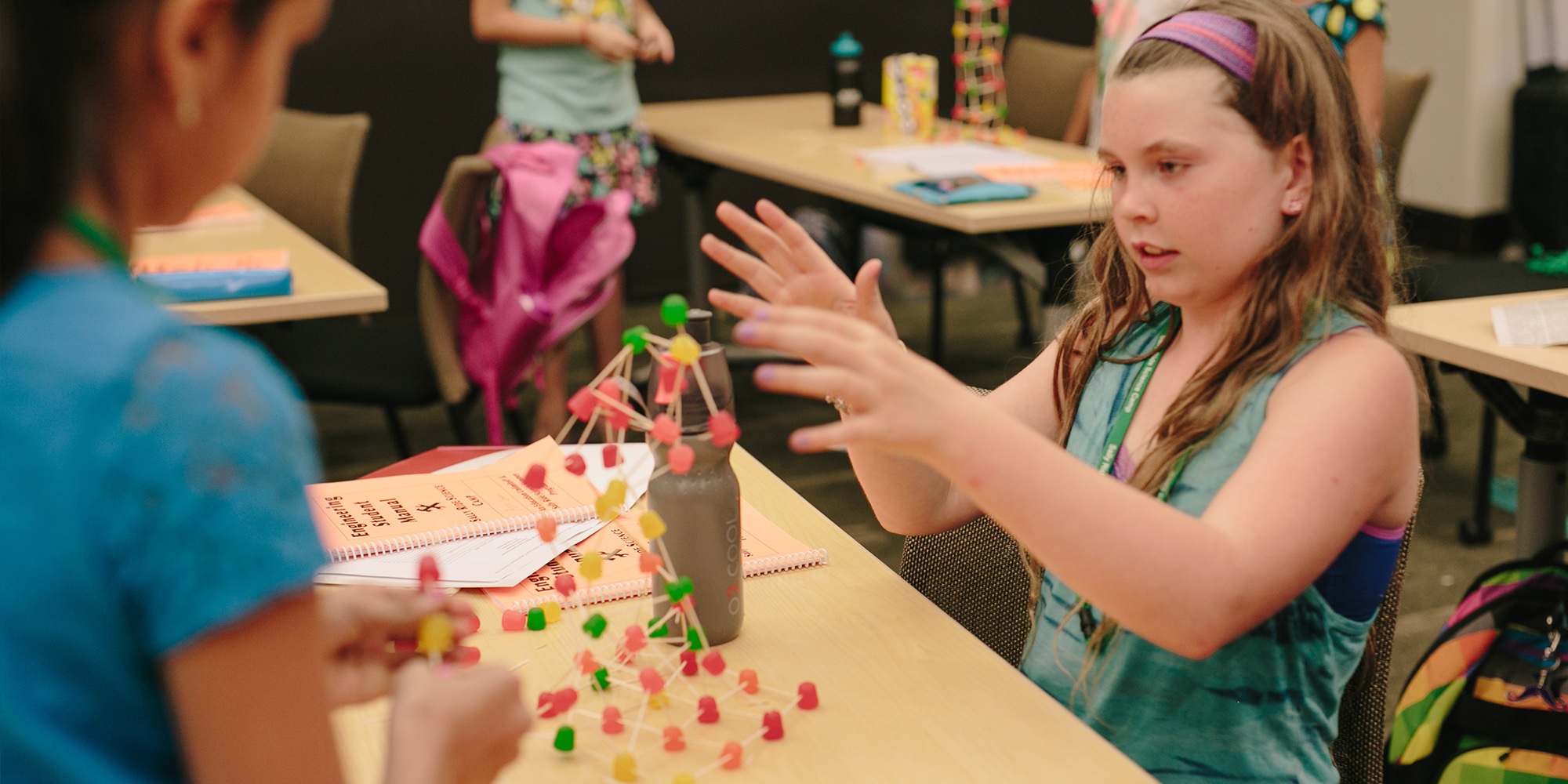
The activities program is built around hands-on engineering challenges that ask students to learn by building. Campers start the week by working with ideas inspired by real buildings and structures, including skyscrapers and bridges. From there, they move into challenges involving planes, boats, and cars, exploring how engineering design changes when air resistance, density, friction, and other physical forces come into play.
As the week continues, the projects become more elaborate. Students work collaboratively with teammates and instructors to solve build problems that involve both scientific thinking and creative problem-solving. The curriculum specifically highlights concepts such as force, energy, mass, gravity, buoyancy, air resistance, and centripetal force. Campers do not just hear about those ideas. They use them while designing windmills, helicopters, rockets, planes, and even a spinning toy.
Another nice feature is that the camp is not limited to one “major” lab block. Students also take part in science minor labs and workshops in the afternoons. These may include other science fields such as forensic science, astronomy, cardiology, environmental science, ocean or marine science, and other topics, depending on the teacher's expertise. That gives the week extra variety and broadens the experience beyond engineering alone.
The final egg drop challenge gives the program a strong capstone. Campers apply what they have learned, work under pressure, and test whether their final invention succeeds. For children who enjoy building, experimenting, and trying again after a failed first attempt, that kind of ending can be especially satisfying.
At Stanford, this program offers three attendance options: day camp, extended-day camp, and overnight camp. That flexibility makes it easier for families to choose a format that matches their child’s age, stamina, and comfort level. Day campers attend the academic program during the day; extended-day campers stay for evening recreation; and overnight campers live on campus for the full session.
Overnight students stay in university residence halls, which gives the experience a more immersive pre-college feel. Most rooms are doubles, so campers should generally expect one same-sex roommate. The organization says it tries to accommodate some single or triple requests when possible, but room assignments depend on campus housing availability. Same-gender friends can also submit mutual roommate requests before assignments are finalized.
The residential setup is structured and supervised. Dorm floors are separated by sex, and same-sex staff members live on the floors with campers to provide evening supervision and overnight support. The Camp Director and Assistant Director also remain in the dormitory during camp. One Stanford-specific practical detail is that students need to bring their own bedding for an XL twin bed, though a bedding pack rental is available for an added fee.
Meal coverage depends on the attendance option. Day campers attend the core program from Monday through Friday, but meals are not included in standard day tuition. They can either bring a lunch from home or purchase an optional lunch package, which includes weekday dining hall lunch. That package is described as buffet-style with hot and cold choices and beverages.
Extended-day campers receive both lunch and dinner in the campus dining hall. Overnight campers receive all meals, including breakfast. This setup makes the longer camp formats feel much more complete, since students can stay on campus through classes, workshops, recreation, and evening activities without needing to leave for meals.
There is also a Sunday check-in detail that helps ease younger campers into the week. Day and extended-day campers check in Sunday and are provided dinner after check-in. That gives children a chance to get comfortable with the environment before the Monday program begins.
For families managing food allergies or dietary restrictions, the camp does not directly operate the dining halls. Parents need to work with the campus dining manager to arrange special dietary accommodations. The organization notes that campuses have often been able to support common dietary needs, but early communication is recommended.
The camp appears to run with a fairly structured supervision model, which is especially important for this younger age group. Education Unlimited says its camps average about a 1:12 instructor-to-student ratio over the summer, though some classes may go as high as 1:18. It also states that there is about one adult for every ten campers in the program. That supports the small-group, guided feel described on the camp page.
For grades 4 through 6, supervision rules are more hands-on than for older students. The official FAQ says middle school and elementary campers are usually required to walk with a staff member whenever they move outside the immediate dorm and classroom area. For the youngest campers, the program also tries to provide line-of-sight supervision during the day and when moving between buildings, except for bathroom use or time in the residence hall area.
Residential safety procedures are clearly described. Dorms are secure, with key access required for entry. Floors are separated by sex, same-sex staff live on the floors, and the camp uses regular roll calls in the morning, before meals, and before activities, along with two evening checks. After room check, overnight campers are expected to stay in their rooms except in emergencies or for necessary restroom trips. The organization also says every employee receives a background check at hire and again annually.
This is an academic camp on a university campus, not a medically staffed sleepaway camp with an on-site nurse. The official FAQ says there is no nurse on site. Instead, the program operates in educational facilities with nearby clinics and hospitals, and families are asked to report medications and special medical needs on the required medical form before camp begins.
Medication procedures are clearly outlined. In general, non-rescue medications are stored in the camp office, and students go there at the appropriate times to self-administer them. Families are asked to send only the medications actually needed during camp, and those medications should be in original containers clearly labeled with the student’s name and dosage.
Rescue medications such as inhalers and EpiPens are expected to stay with the student at all times. The camp also asks for a backup set to be stored in the camp office in case the primary set is misplaced.
For dietary issues tied to health needs, parents must coordinate directly with Stanford dining services rather than camp staff. Families with more involved medical, allergy, or supervision concerns would be wise to communicate with the program before enrollment so any accommodations can be discussed in advance.
Final payment is due 45 days before the program start date
If applying less than 45 days before camp, families have 7 days to complete payment and paperwork
Deposits are generally nonrefundable unless a protection plan was purchased at registration
No refund is provided once camp begins
If the organization cancels a program for low enrollment, paid tuition is refunded
If a program is canceled because of force majeure or a campus cancellation, the organization states that a 100% camp credit is issued instead of a cash refund


