
Camp Info
| Ages: | 4–13 |
| Type: | Day |
| Month: | Summer |
| Gender: | Co-Ed |
| Setting: | City |
| Technology: | Technology, Robotics, Rocketry, STEM |
| Academics: | Academics, Science, Chemistry, Environmental Science, Physics |

Beverly Hills, CA, USA
Camp Invention is a STEM-focused summer program created by the National Inventors Hall of Fame. It encourages children to explore science, engineering, and innovation through hands-on challenges and collaborative problem-solving. Instead of traditional classroom lessons, campers learn by building, experimenting, and inventing.
Throughout the program, campers rotate through several themed modules designed to spark curiosity and creativity. In Fur-ensics™, children investigate mysteries using forensic science concepts such as fingerprints and evidence analysis while working with a robotic capybara. In Make Waves™, campers explore entrepreneurship and physics while designing and testing floating billboard boats.
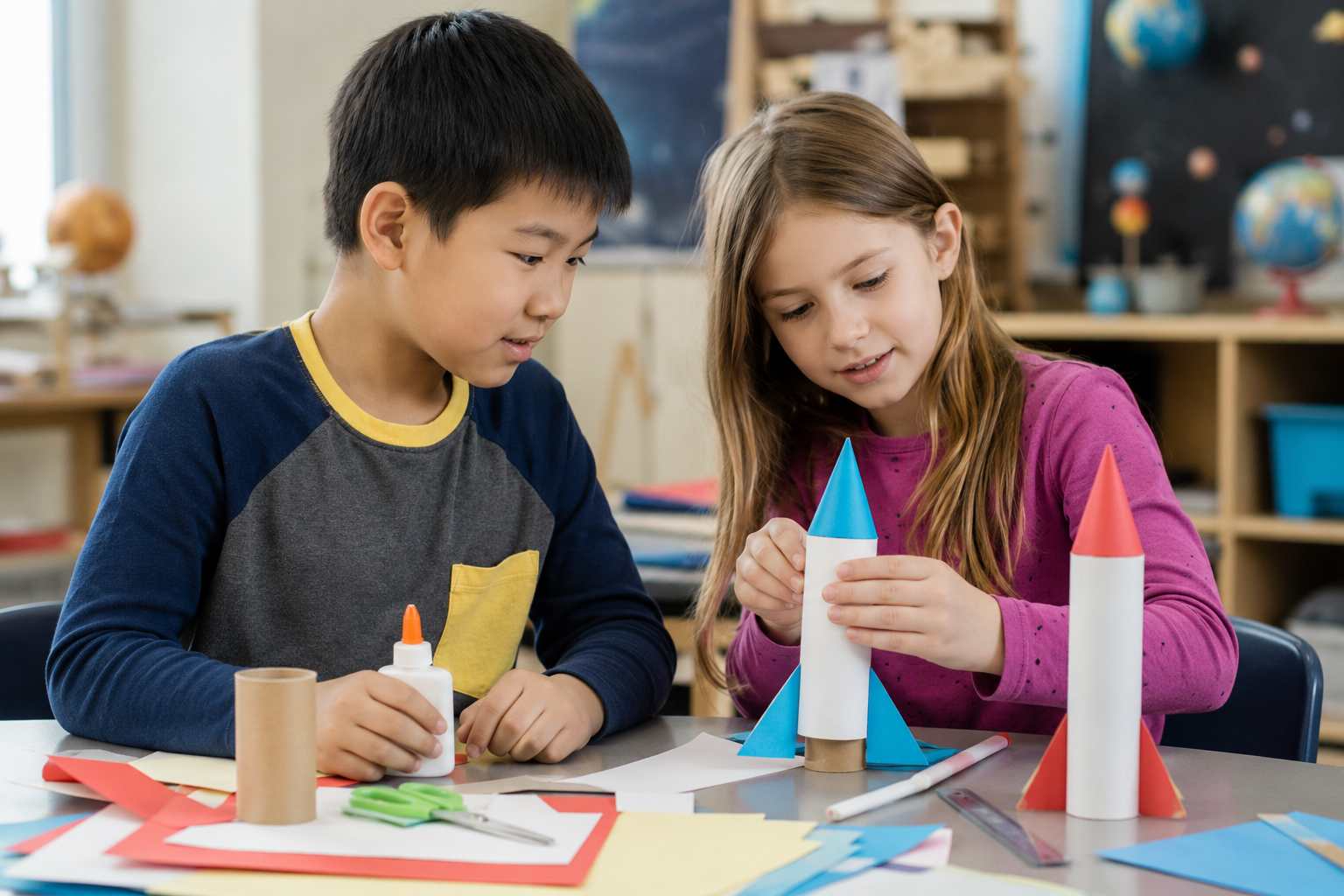
The program continues with Space Morphers™, where young explorers build rockets, study planetary science, and record scientific observations during a simulated space mission. In The Infringers™, campers collaborate with the Innovation Force®—a group inspired by National Inventors Hall of Fame Inductees—to solve real-world challenges while learning how inventors protect their ideas.
Camp Invention is designed primarily for children ages 6–11. At this age, kids are naturally curious and eager to explore how things work. The program turns that curiosity into active learning through creative invention and experimentation.
Campers leave the experience with stronger problem-solving skills, confidence in their ideas, and a deeper interest in science, engineering, and innovation.
| Ages: | 4–13 |
| Type: | Day |
| Month: | Summer |
| Gender: | Co-Ed |
| Setting: | City |
| Technology: | Technology, Robotics, Rocketry, STEM |
| Academics: | Academics, Science, Chemistry, Environmental Science, Physics |
You won’t be charged yet. The camp will contact you to confirm all terms first.
| Dates | Days | Price | Apply |
|---|---|---|---|
| Jun 15 - Jun 18, 2026 | 4 | $355 |
Camp Invention focuses on hands-on STEM exploration where campers learn by building and experimenting. Each day, students rotate through several invention-themed modules designed to introduce science, technology, engineering, and creative thinking.
In one module, campers might design and build a prototype using everyday materials. Another module may challenge students to solve engineering problems through teamwork and experimentation. These challenges encourage children to test ideas, learn from mistakes, and refine their designs.
Creative thinking plays a central role. Campers brainstorm solutions, sketch ideas, and build models that bring their concepts to life. Instructors guide discussions and ask questions that help students think deeper about how their inventions work.
The program emphasizes collaboration. Many activities involve small teams working together to solve challenges. This helps campers build communication skills and learn the value of multiple perspectives.
Through exploration and experimentation, campers gain confidence in their ability to innovate and solve problems.
Camp Invention operates as a day camp, meaning campers attend during scheduled daytime hours and return home each afternoon. There is no overnight accommodation or residential housing.
Camp activities typically take place in a school or educational facility, with classrooms used for different invention modules. Campers rotate between activity spaces as they participate in hands-on challenges throughout the day.
Camp Invention operates in a structured classroom-style environment, with activities supervised by trained educators and staff. Campers remain with their assigned group and instructors throughout the day.
Hands-on projects involve building, experimenting, and creative problem-solving. Staff guides campers through each activity to ensure materials are used safely and appropriately. Instructions are provided before each challenge, and instructors monitor progress during the activity.
Because most projects take place indoors in controlled classroom settings, the environment is organized and manageable. Clear schedules help maintain smooth transitions between modules.
Supervision and structured learning spaces allow campers to explore ideas while remaining in a safe, supportive environment.


