Accommodation
Mater Dei Catholic Youth Summer Camps are day camps. Campers attend their selected camp session during the day and return home afterward. No overnight lodging, dorm rooms, cabins, hotel stays, or residential supervision are included.
Most camps run as short morning or afternoon programs rather than full-day childcare. Camp lengths vary by program. Some camps meet for three days, some run Monday through Thursday, and several continue across two weeks. The Youth Strength and Conditioning Camp meets in the afternoon, while many arts and sports camps run in the morning.
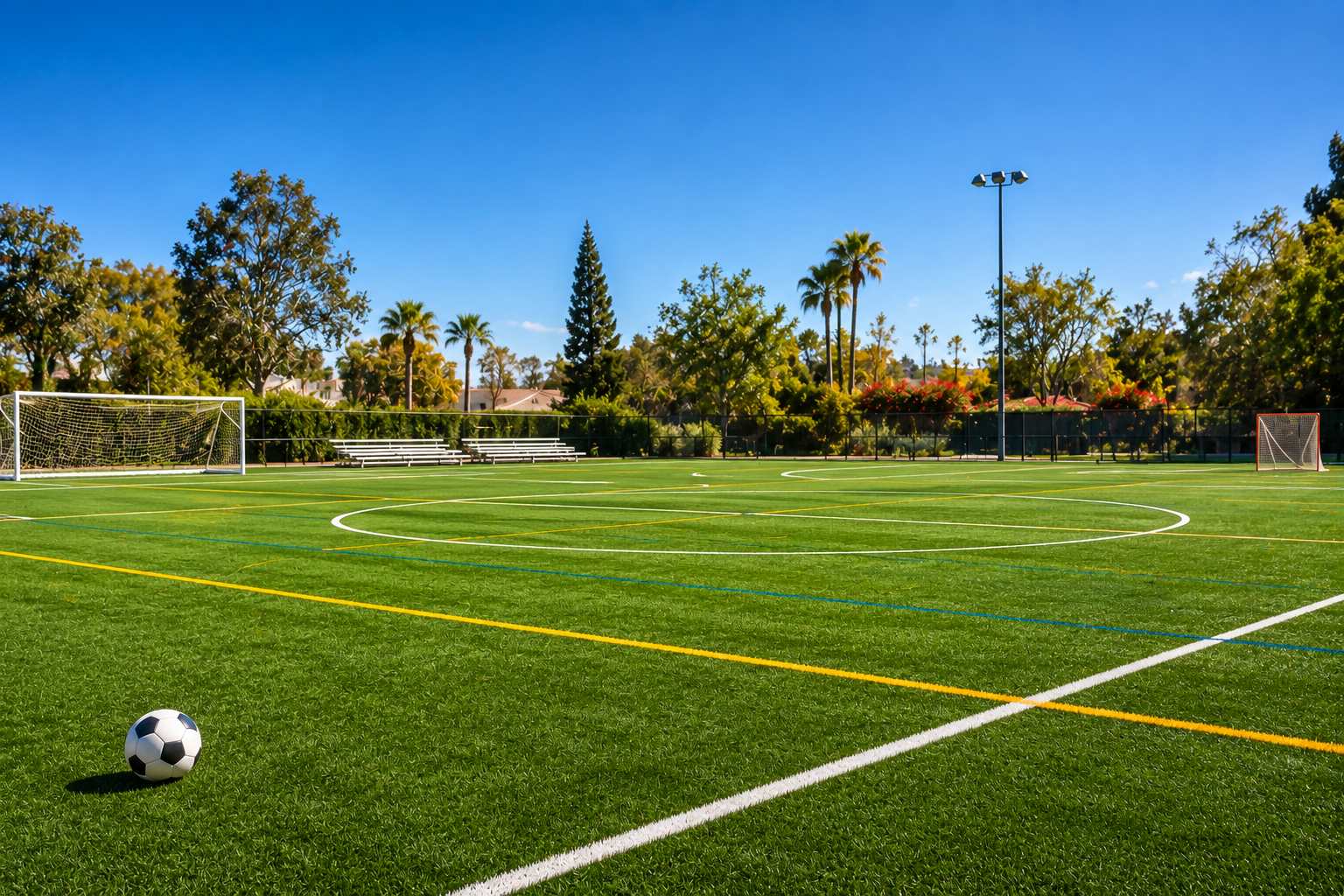
Activities take place in campus-based settings such as classrooms, theater, gym, stadium, tennis courts, senior lawn, or designated drop-off and pick-up zones. Families should plan for daily transportation based on the selected camp’s schedule.
The program is best understood as a collection of specialty camps, not one all-day general summer camp. Each child enrolls in a specific camp with its own grade range and activity focus.
Meals
Meals are not listed as provided. Campers bring food and drinks in accordance with the selected camp’s requirements.
Several camps ask students to bring a snack and water. Youth Jr. Musical Theater and Youth Performing Arts Camp ask campers to bring snacks, lunch, and water. Youth Clay Camp asks for a water bottle and a snack. Youth Soccer asks for a water bottle, a snack, and sunscreen. Youth Volleyball asks for a refillable water bottle. Youth Tennis asks for a water bottle and a tennis racket. Youth Basketball Skills asks for a water bottle and a towel.
Because camp schedules vary, food needs also vary. A three-hour morning sports camp may only require water and a snack, while longer arts camps may require lunch. Families should pack based on the specific camp selected.
Prepared meals, cafeteria lunch, catered snacks, refrigeration, microwave access, and allergy-specific meal support could not be confirmed from the available camp information.
Safety
Mater Dei Catholic Youth Summer Camps are described as safe, supportive, and engaging. Camps are led by experienced coaches and instructors who work with students in grade-appropriate groups and skill-specific settings.
Several camp descriptions include safety-related preparation details. Clay Camp requires closed-toe shoes. Performing Arts Camp asks students to wear athletic attire, tennis shoes, and leggings. Soccer campers should wear athletic attire and soccer cleats and bring sunscreen. Cheer campers should wear athletic shoes and keep their hair out of their faces. Volleyball campers are advised to wear volleyball, court, or cross-trainer shoes, with knee pads recommended. Tennis campers need tennis shoes and a racket.
The Youth Strength and Conditioning Camp uses a gym facility with training equipment, timing systems, and Velocity-Based Training technology. Sports camps are led by designated coaches and held in designated campus athletic areas.
Specific staff-to-camper ratios, check-in rules, authorized pick-up procedures, emergency protocols, background-check details, and first-aid staffing details could not be found in the available camp information.
Camp traditions
Mater Dei Catholic Youth Summer Camps carry a school-campus rhythm: students arrive for a focused camp, work with instructors or coaches, practice a skill, and build toward a clear outcome. In arts camps, the outcome may be a production or a showcase. In athletic camps, it may be stronger fundamentals, better confidence, and more comfort in a sport.
Performance is a visible part of the camp culture. Youth Jr. Musical Theater presents The Lion King Jr., with auditions available for the main cast and ensemble. Youth Performing Arts Camp works toward a final production of Alice in Wonderland, giving younger performers a stage goal.
Athletic camps create their own traditions through skill stations, drills, games, matches, and team-building. Volleyball focuses on passing, serving, and hitting. Soccer helps students learn the basics and improve their game knowledge. Tennis includes drills, game etiquette, games, and matches. Strength and conditioning give middle school athletes access to a more advanced training environment.