
Camp Info
| Ages: | 8–14 |
| Type: | Day |
| Gender: | Co-Ed |
| Setting: | City |
| Arts: | Arts, Fine Arts, Photography, Digital Arts |
| Meals Type: | Bring Your Own |
| Time: | 09:00 AM - 03:00 PM |
| Staff to Сamper Ratio: | 1:10-12 |

Redondo Beach, CA, USA
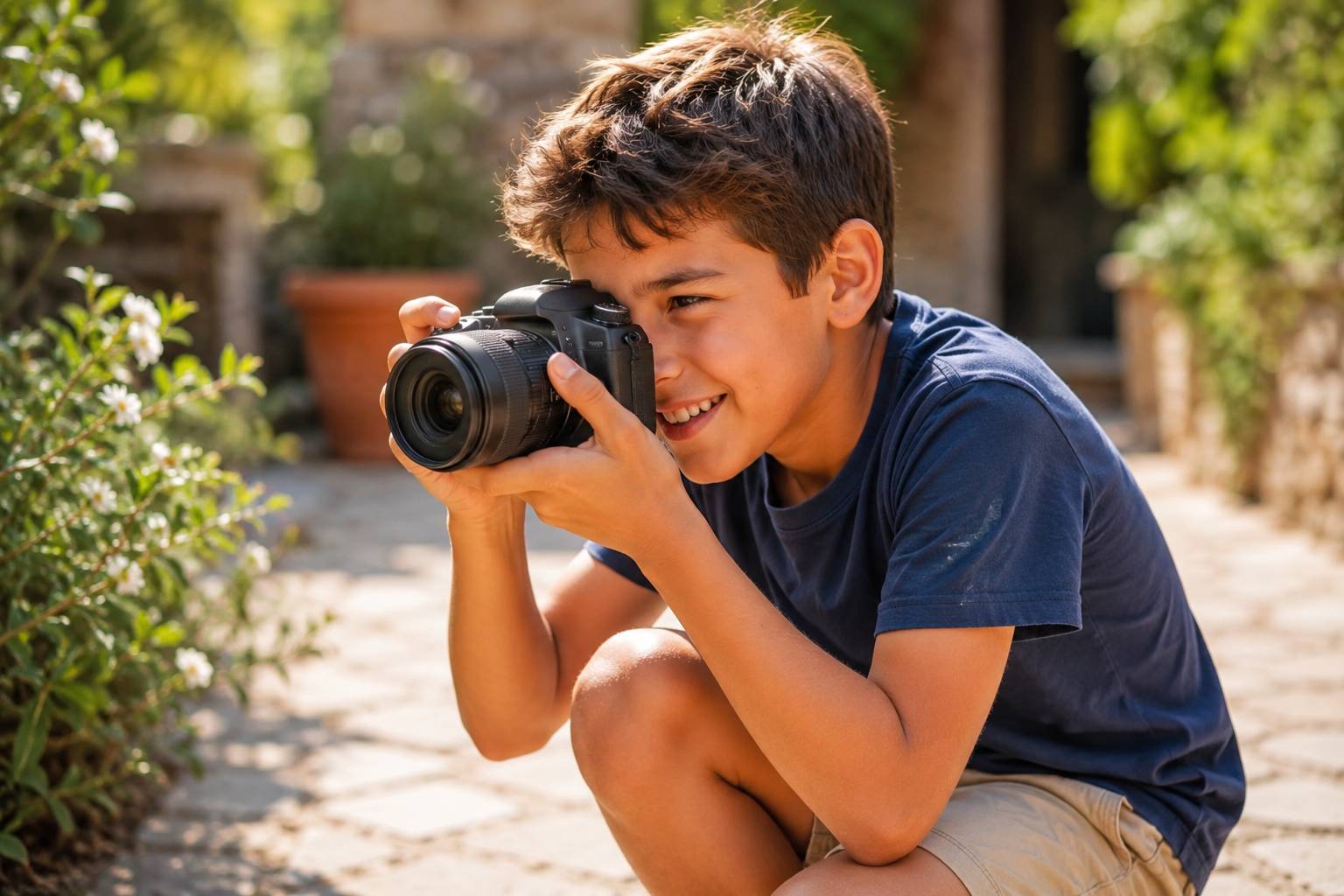
Young photographers spend a full camp week learning how to make stronger pictures with intention, not simply point and shoot. The program is designed for ages 8–14 and combines camera fundamentals with creative assignments across several photographic styles. Campers work with composition, exposure, light and shadow, and depth of field, then use those ideas for portraits, headshots, still life, landscapes, commercial images, candid scenes, and live action.
The creative process continues at the computer, where campers learn to enhance and master selected images with software applications. Photo stories, collage, special effects, and portfolio design broaden the week beyond basic camera operation. Each camper develops a notebook-style portfolio built from approximately 15 selected photographs. Images are mastered during camp, printed at home, and then arranged as part of the portfolio curriculum.
The Redondo Beach program runs as a day camp at Temple Menorah, with most of the camp day held indoors. Groups are intentionally small, with a maximum of 12 students per site per session. Campers need to bring their own digital camera and a 16 GB flash drive, making this a practical choice for children who want hands-on photography practice and are ready to work with their own equipment.
| Ages: | 8–14 |
| Type: | Day |
| Gender: | Co-Ed |
| Setting: | City |
| Arts: | Arts, Fine Arts, Photography, Digital Arts |
| Meals Type: | Bring Your Own |
| Time: | 09:00 AM - 03:00 PM |
| Staff to Сamper Ratio: | 1:10-12 |
You won’t be charged yet. The camp will contact you to confirm all terms first.
| Dates | Days | Price | Apply |
|---|---|---|---|
| Jul 26 - Jul 30, 2027 | 5 | $595 | |
| Jul 26 - Jul 30, 2027 | 5 | $595 |
Photography Camp is organized as a one-week day program that moves from camera fundamentals into creative shooting and digital post-production. Campers learn how camera settings and visual composition affect an image, then explore color, contrast, black-and-white photography, exposure, light and shadow, and depth of field. Those techniques are applied to headshots and portraits, still life, landscapes, commercial or advertising images, candid scenes, and live-action photography.
The curriculum also includes special effects, photo stories, collage, photo mastering with computer software, and portfolio design. Campers select photographs from the work they create during the week and master those images at camp. Families print the selected photographs at home, and campers compile and arrange them into a notebook-style portfolio as part of the curriculum. The published target is approximately 15 photographs in the final portfolio.
Participation does not depend on prior photography experience. The practical requirement is equipment: each student must bring a digital camera and a 16 GB flash drive. The Redondo Beach site operates with a maximum of 12 students per session, supporting a small-group workshop format.
Campers need to bring a mid-morning snack, a complete lunch, a beverage, and a bottle of water each day. Camp facilities do not provide refrigeration for children’s lunches. Families should pack food that does not require refrigeration or use an insulated lunch box with an ice pack for items that need to stay cold. The FAQ also recommends packing enough food for both snack time and lunch because the camp day is active.
PAW says teaching staff are extensively screened and vetted before working with campers. Teachers must clear a criminal background check, and the published teacher-to-student ratio is one adult for every 10 to 12 children. The organization also keeps regular communication between its office and camp sites so information about campers can be relayed without pulling teaching staff away from supervision. On-site directors and teachers are required to call the PAW office multiple times during the day.
Parents are required to disclose allergies, medications, disabilities, or special needs by email at enrollment and provide guidance for the camp team. In some circumstances, PAW can assist with simple medications when written permission has been provided. Families using this arrangement are asked to arrive early on the first day, meet the on-site camp director, review the medication plan, and clearly label medication with the child’s name and use instructions.
PAW describes its teachers as professionals in their respective fields who have, or are working toward, bachelor’s or master’s degrees and have prior experience working with children. Teachers are screened before placement and must clear a criminal background check. The organization also emphasizes instructors’ ability to teach arts curriculum in an engaging and kind manner.
Parents can contact the PAW office during camp hours when they need to relay an important message or reach on-site staff. Directors and teachers call the office multiple times each day, creating a regular channel between the central office and camp locations. Families with medication, special-needs, casting, or separation concerns are encouraged to arrive early and speak with the on-site director directly.
Regular drop-off and supervised playtime run from 8:45 AM to 9:00 AM, followed by camp from 9:00 AM to 3:00 PM and pickup/playtime until 3:10 PM. Sunrise Student access begins at 8:00 AM; Extended Play is not offered at the Redondo Beach location. Photography campers must bring their own digital camera and a 16 GB flash drive, along with a snack, lunch, beverage, and water.
Summer camp cancellations are eligible for a refund through June 1, subject to a $135 non-refundable cancellation fee. No refunds are available after June 1.


