
Camp Info
| Ages: | 9–14 |
| Type: | Day |
| Gender: | Co-Ed |
| Setting: | City |
| Academics: | Academics, Life Skills, Debate, Public Speaking |
| Meals Type: | Bring Your Own |
| Time: | 09:00 AM - 03:00 PM |
| Staff to Сamper Ratio: | 1:10 to 1:12 |

Torrance, CA, USA
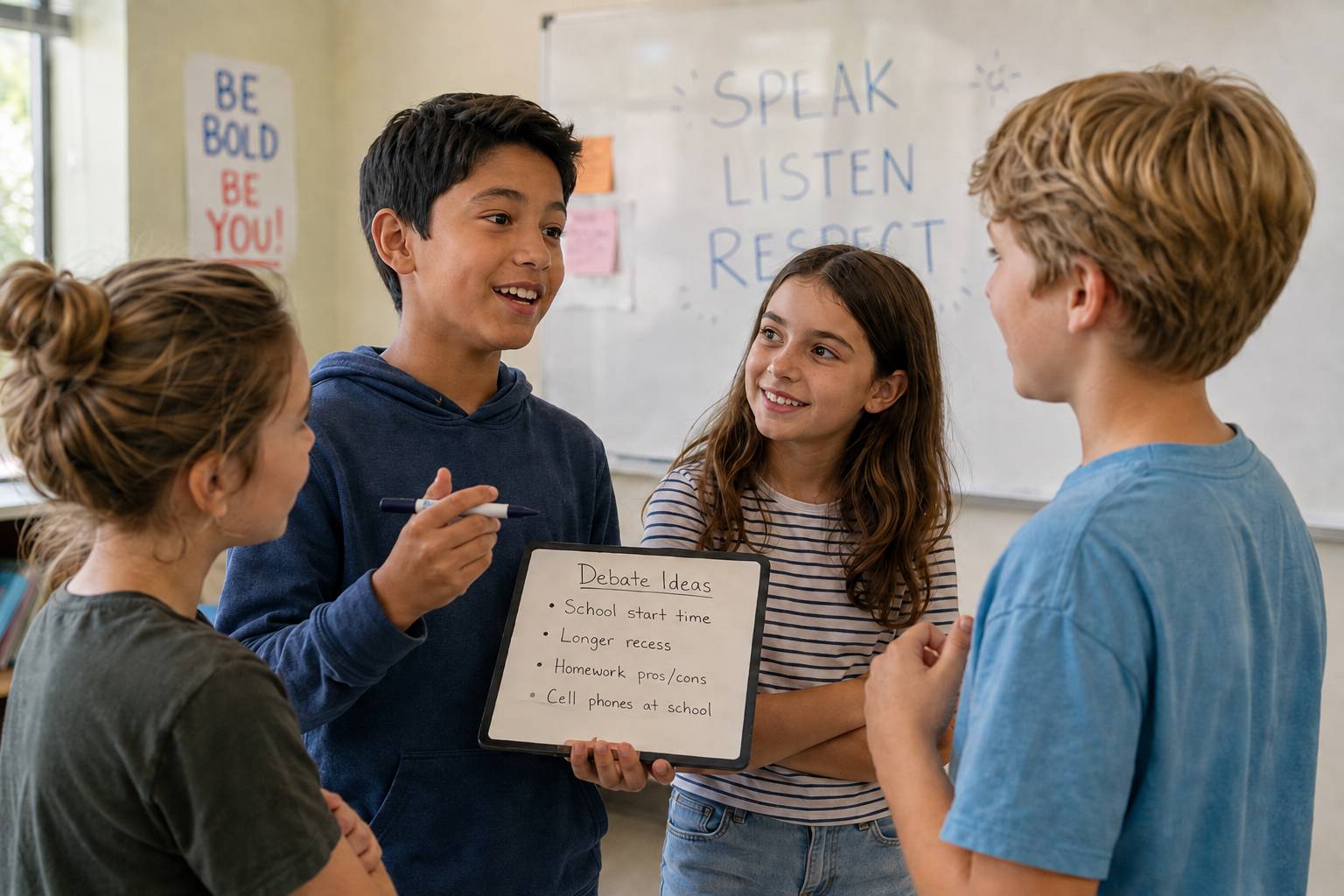
Campers spend the week learning how to turn an opinion into a clear, supported argument. Debate Lab introduces ages 9 to 14 to the International Public Debate Association format while building the practical skills behind a strong case: organizing ideas, finding credible evidence, mapping points, asking cross-examination questions, listening closely, and responding with a thoughtful rebuttal. Topics are designed to be age-appropriate and relevant, giving children repeated chances to examine more than one side of an issue and explain why their reasoning holds up.
The curriculum blends structured debate instruction with games, hands-on exercises, questions and answers, round-table discussion, wordplay, vocabulary work, voice and speech practice, and a regular “debate of the day.” Campers work on delivery, courtesy, tone, organization, logic, support, cross-examination, and refutation while learning how disagreement can stay respectful and productive. The program is described as fun, safe, and non-competitive rather than focused on winning at all costs.
This format is a strong fit for children who enjoy asking questions, sharing ideas, writing persuasively, speaking to a group, or testing how well an argument holds up. Along the way, campers practice critical thinking, active listening, collaboration, public speaking, empathy, leadership, and civic-minded discussion. They also build vocabulary and learn to consider opposing arguments before shaping a response, all within a structured day-camp setting.
| Ages: | 9–14 |
| Type: | Day |
| Gender: | Co-Ed |
| Setting: | City |
| Academics: | Academics, Life Skills, Debate, Public Speaking |
| Meals Type: | Bring Your Own |
| Time: | 09:00 AM - 03:00 PM |
| Staff to Сamper Ratio: | 1:10 to 1:12 |
You won’t be charged yet. The camp will contact you to confirm all terms first.
| Dates | Days | Price | Apply |
|---|---|---|---|
| Jun 14 - Jun 18, 2027 | 5 | $595 | |
| Jul 19 - Jul 23, 2027 | 5 | $595 |
Debate Lab uses the International Public Debate Association format as the framework for a one-week language arts camp. Campers learn how a formal debate works before applying the structure to age-appropriate questions and topics. Instruction covers argument organization, credible evidence, roadmapping, cross-examination, refutation, delivery, tone, logic, support, and debate scoring. Voice, speech, diction, vocabulary, persuasive writing, and public speaking are woven into the same curriculum.
The week is not built around lecture alone. Campers practice through games, hands-on activities, questions and answers, round-table discussions, and a recurring debate of the day. They are asked to consider pros and cons, respond to opposing viewpoints, and “agree to disagree” with open-mindedness, empathy, and respect. That gives children repeated opportunities to speak, listen, organize a response, and revise their thinking as a conversation develops. Cross-examination and rebuttal practice add another layer by asking campers to respond directly to another speaker’s reasoning.
The program’s stated learning outcomes include critical thinking, active listening, collaboration, persuasive writing, public speaking, leadership, and civic-mindedness. The approach is described as fun, safe, positive, and non-competitive, so the emphasis remains on building communication skills and exploring ideas rather than simply producing a winner and a loser.
Families provide food for the camp day. Each camper should arrive with a mid-morning snack, a complete and filling lunch, a beverage, and a bottle of water. The camp advises families to pack enough food for both snack and lunch periods because the day is active and campers may be hungry early. Snack and lunch are part of the shared camp-day schedule.
Camp facilities do not provide refrigeration for children’s lunches. Food that needs to stay cold should be packed in an insulated lunch box with an ice pack. Parents are also asked to disclose allergies and other relevant health needs so the camp can plan appropriate support and instructions before the session begins. Families should make sure children arrive with their lunch box and other needed items at daily sign-in.
Every camper must be signed in and signed out each day. The adult dropping off signs the child in, and the person picking up signs the child out. When someone other than a parent or guardian will pick up a camper, or when a child has permission to walk or bike home, PAW requires additional authorization on file. Children are not released to leave without the required permission, and the camp maintains written procedures for these exceptions.
Teaching staff are screened before working with campers. The published hiring standards include prior experience with children and a criminal background check. The camp also maintains supervised arrival, regular dismissal, and location-specific extended-care procedures so children remain under staff supervision until they are properly signed out. At sites with Extended Play, including Torrance, campers who remain after the regular pick-up period continue in supervised care until the location closes.
Parents must disclose allergies, medications, disabilities, medical needs, or special needs and complete the camp’s required guidance paperwork so staff know what support is needed. On the first day, families with medication arrangements are asked to review instructions with the on-site camp director. Medications that PAW has agreed to assist with are labeled and kept with the director for safekeeping, and parents are asked to provide clear written instructions.
With written permission, PAW may be able to help administer some simple medications, but instructors are not medical professionals and do not have specialized medical or special-needs training. Some situations may require additional documentation from a parent or doctor, and certain campers may need an adult aide provided by the family. Families are encouraged to contact the camp before enrollment when a child may need individualized support so required paperwork and arrangements can be completed before attendance.
PAW instructors are professionals working in their fields or are pursuing related bachelor’s or master’s degrees, and they have prior experience teaching or working with children. Staff members are required to clear a criminal background check before being placed in the classroom. The organization emphasizes instructors who can present specialized curriculum in an engaging, kind, and child-friendly way. The published teacher-to-student ratio is one adult for every 10 to 12 children, supporting opportunities for individual attention during camp activities.
Parents may be contacted during the camp day when staff need help resolving an immediate issue, such as a forgotten lunch, illness, or a delayed pick-up. PAW asks families to remain reachable while a child is in camp. Required authorization, health, and guidance forms are also used to pass important information from families to the office and on-site team before or during the session.
Regular drop-off and supervised play run from 8:45 to 9:00 AM, with the camp day ending at 3:00 PM and the standard Torrance pick-up window continuing to 3:10 PM. Families that need an earlier start may add Sunrise Student care from 8:00 to 8:45 AM, and Torrance also offers optional Extended Play from 3:10 to 5:00 PM.
Debate campers should bring the composition book provided by PAW each day, along with their packed snack, lunch, drink, and water. Families should also complete any required pick-up, walking, allergy, medication, or special-needs forms before those permissions or supports are needed.


