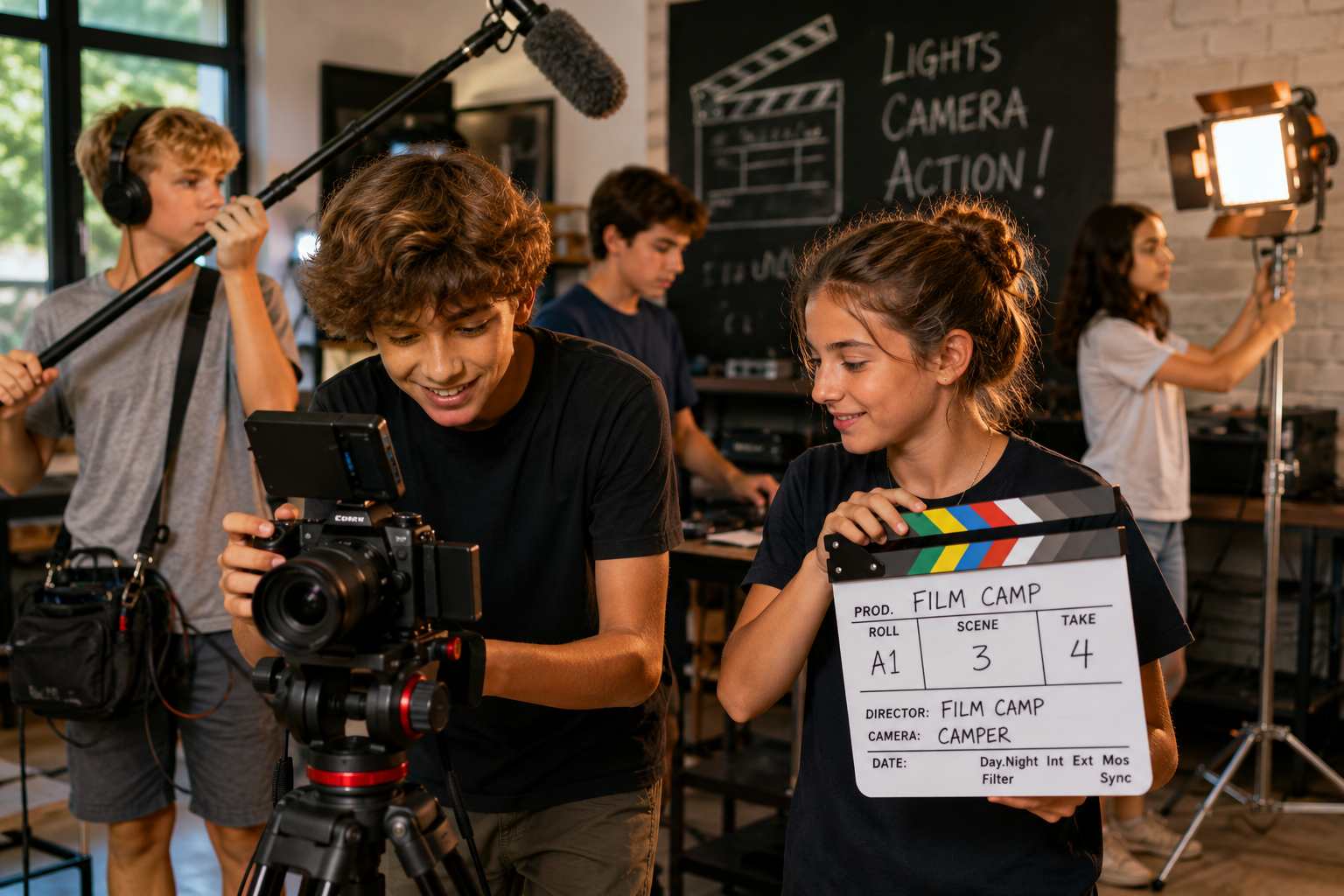
Accommodation
San Diego Film Camp is a day camp. Campers attend during the scheduled day and return home afterward. No overnight lodging, cabins, dorm rooms, hotel stays, or residential supervision are included.
The San Diego camp runs Monday through Friday from 8:30 AM to 3:00 PM. The program takes place on a school campus in La Jolla, with creative work happening during the camp day and outdoor breaks built into the experience. Families should plan for daily drop-off and pick-up.
The campus setting includes secure, gated grounds, a large sports field, playgrounds, recess areas, and open space for students to recharge between filmmaking sessions. This helps balance the screen-and-production side of camp with movement, fresh air, and breaks.
The format is not a general childcare program. It is a full-day creative production camp where campers spend the week developing film projects, learning tools, collaborating in teams, and preparing completed work to share.
Meals
Campers bring lunch from home. The essential daily items listed for campers are lunch and a positive attitude.
Food service, cafeteria meals, catered lunch, snack service, and special diet support are not described in the available information about the camp. Families should pack a lunch that works for a full creative camp day and does not require complicated preparation.
Since campers work on film projects, move around campus, and collaborate throughout the day, a labeled water bottle is also a practical item to send. Campers may bring props and costumes from home, but valuables should stay home. Skateboards should also stay home.
Safety
San Diego Film Camp uses a secure, gated school campus with space for outdoor breaks, playground time, and movement between filmmaking sessions. The camp environment is described as safe, inclusive, respectful, and encouraging, with age-based groups and instruction matched to students’ developmental level.
Families complete required forms during registration. These include a Parent Release Form, a Video and Photography Release Form, and a Liability Form. The Parent Release Form authorizes camp organizers to make decisions in emergencies. The Liability Form acknowledges activity risks, and the photo/video form covers media use connected to camp.
The camp also has a strict nonviolence policy for student films. Suspense, tension, mood, sound design, and visual storytelling are encouraged, while graphic violence is not part of the creative approach.
Camp traditions
San Diego Film Camp has a clear creative tradition: students finish the week with real projects. Campers do not only learn film vocabulary. They write, shoot, edit, perform, direct, collaborate, and complete films that can be shared after camp.
The final project download is an important part of the experience. Completed films are available at the end of each camp week, and families receive information for viewing, sharing, and downloading student projects. That gives campers a concrete result from the week and a reason to care about the details during production.
Another tradition is the script-to-screen process. Campers begin with ideas, shape them into stories, work with teammates, handle production roles, and bring the final piece together through editing. Younger campers may build puppets or create animated pieces. Teens may work on cinematic short films using professional-style workflows.
The camp culture is collaborative, creative, and project-driven. Students learn that filmmaking is not a solo activity. It takes communication, patience, leadership, and trust.