
Camp Info
| Ages: | 5–11 |
| Type: | Day |
| Month: | Summer |
| Gender: | Co-Ed |
| Setting: | City |
| Technology: | Technology, Robotics, Innovation, STEM |

Encinitas, CA, USA
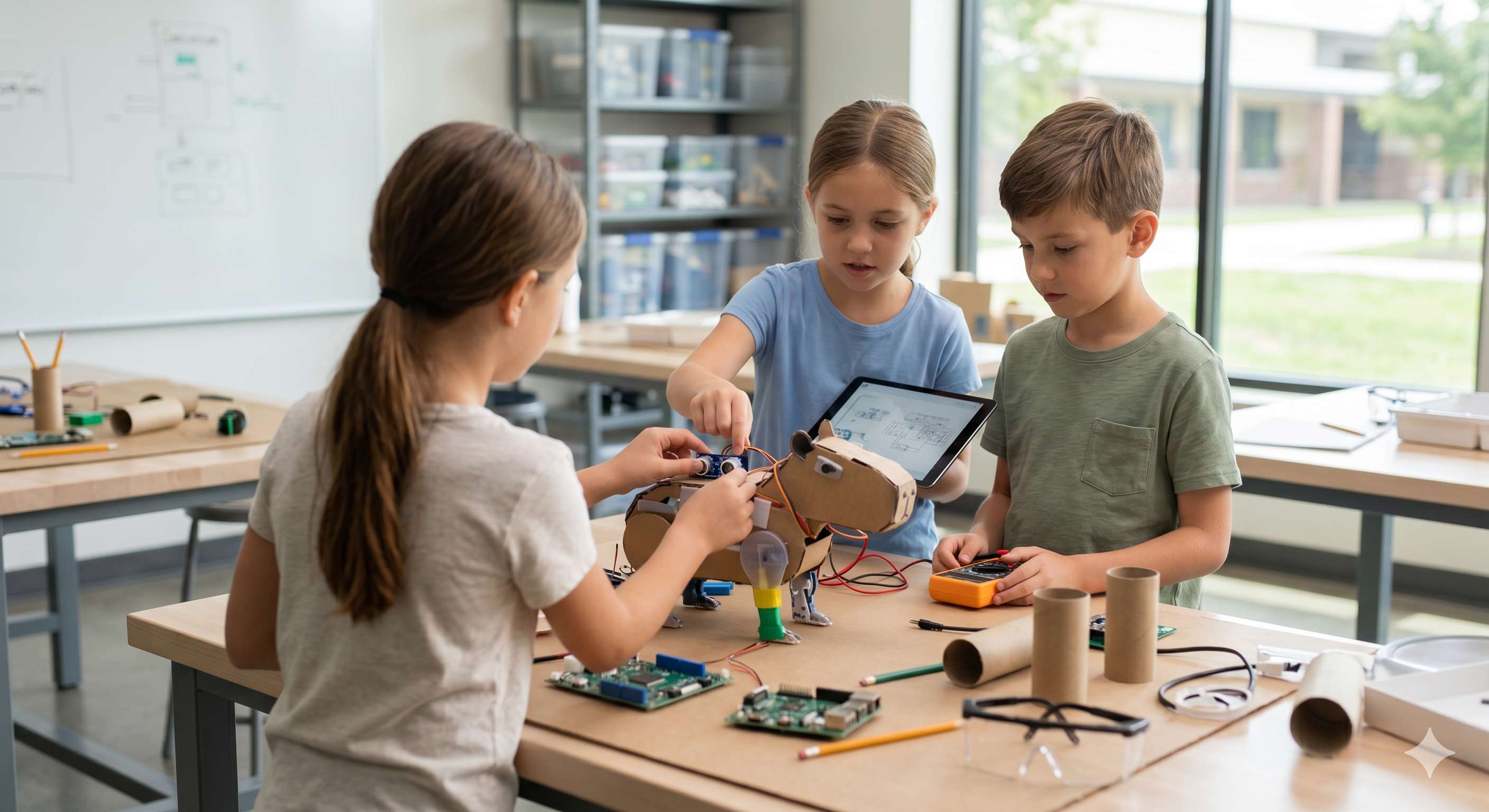
Camp Invention San Diego is a weeklong STEM day camp for children entering grades K–6. The San Diego program uses the Camp Invention: Spark curriculum, which is built around four hands-on invention experiences: Fur-ensics, Make Waves, Space Morphers, and The Infringers.
The camp is designed for curious children who enjoy building, experimenting, solving mysteries, working with friends, and turning ideas into physical creations. Campers explore forensic science with a robotic capybara, test buoyancy and entrepreneurship through a floating billboard boat, design a DIY rocket for a space mission, and learn about invention protection through cryptography and intellectual property challenges.
The daily structure is active and varied. Campers start at Base Camp, join a warm-up activity, rotate through two invention experiences in the morning, break for lunch and games, then continue with two more afternoon challenges. The experience ends each day with another problem-solving activity before pickup.
The program is especially well suited for elementary-age children who like open-ended challenges. It also works for kids who may not think of themselves as “science kids” yet, because the activities feel playful, hands-on, and story-driven.
| Ages: | 5–11 |
| Type: | Day |
| Month: | Summer |
| Gender: | Co-Ed |
| Setting: | City |
| Technology: | Technology, Robotics, Innovation, STEM |
You won’t be charged yet. The camp will contact you to confirm all terms first.
| Dates | Days | Price | Apply |
|---|---|---|---|
| Jun 22 - Jun 26, 2026 | 5 | $400 | |
| Jul 6 - Jul 10, 2026 | 5 | $400 |
Camp Invention San Diego uses the Spark curriculum, a set of four invention experiences designed to build creativity, confidence, collaboration, and problem-solving. Campers rotate through two experiences in the morning and two more in the afternoon, with lunch and games in between. The structure keeps the day moving and gives children several different ways to engage with STEM.
In Fur-ensics, campers investigate clues, examine evidence, and use a robotic capybara as part of a mystery-solving challenge. Make Waves brings together invention, physics, buoyancy, and entrepreneurship as campers design a floating billboard boat. Space Morphers asks campers to build a DIY rocket and imagine how to transform a planet for future habitation. The Infringers introduces campers to real-world inventors, cryptography, and the idea of protecting inventions from copycats.
The activities are hands-on and open-ended. Campers build, test, redesign, collaborate, and explain ideas. Older students in the Leaders-in-Training program can practice mentoring and collaboration while helping younger campers during the week.
Camp Invention San Diego is a day camp. Campers attend during the scheduled camp day and return home afterward. No overnight lodging, cabins, dorm rooms, hotel stays, or residential supervision are included.
The San Diego session runs from 9:00 AM to 3:00 PM, Monday through Friday. Families should plan for daily sign-in at drop-off and sign-out at pickup. The program takes place at a local school campus and uses classrooms or activity spaces for invention modules, group work, lunch, games, and Base Camp gatherings.
Children rotate through rooms and instructors during the day. This is different from a single-classroom camp where one teacher leads the whole day in one space. The rotating format gives campers a more dynamic experience, but it also means participants should be able to follow directions, transition between activities, and work with different adults and peer groups.
Campers should bring a packed lunch, drink, and snack each day. Items should be clearly labeled with the child’s name.
Lunch is part of the daily camp schedule. After the morning invention experiences, campers break for lunch and then move into outdoor games or gym games, depending on the site and weather. Food is not listed as provided by the camp.
Families should pack meals that are easy for the child to manage independently. Since the camp day includes hands-on projects, games, room rotations, and STEM activities, a sturdy lunch container and labeled water bottle are practical choices.
Camp Invention maintains a Program Team Member-to-child ratio of 1:8. Campers are grouped by grade level, and program experiences have primary and intermediate versions so activities can better match different ages.
The day begins and ends at Base Camp, where families sign children in and out. Campers rotate through supervised invention experiences and work with peers on hands-on STEM challenges. Outdoor time may be included, but children do not leave the program location during camp.
Program instructors are qualified educators selected for their enthusiasm for creative learning. The program follows federal, state, and local guidelines to support a healthy, safe, and fun environment.
Campers need to be able to follow the Program Code of Conduct, participate with peers, work independently at times, and move between rooms and instructors during the day. The camp can be high-energy, noisy, and stimulating. Nurses, special education assistants, aides, and similar school-day support personnel are not on site during Camp Invention programs.
Campers who need medication during the program must provide the necessary information during registration. Medication should be brought in the original container. Prescription medication requires a signed physician’s note, the approved administrator, and instructions.
Program Team Members do not dispense medication, except for epinephrine injectors. Children may self-administer medication if authorized, with staff reminding and supervising them. A parent, guardian, or preauthorized individual may also come to the site to dispense medication when needed.
For campers with severe allergies requiring an epinephrine injector, families should mark the epinephrine section during registration. The Director must be trained by the parent or guardian before the program begins.
Camp Invention has a clear rhythm: arrive at Base Camp, warm up with a creative activity, invent through the morning, refuel, play, build again, and finish with one more problem-solving challenge. That structure makes the week feel like a sequence of missions rather than a regular class.
The 2026 Spark program gives campers four themed worlds to explore. Fur-ensics turns campers into detectives working with a robotic capybara. Make Waves brings in entrepreneurship, buoyancy, and floating designs. Space Morphers sends campers into a rocket-building planetary mission. The Infringers introduces real-world inventors, cryptography, invention protection, and big community challenges.
Another tradition is prototyping with upcycled materials. Campers use ordinary items in inventive ways, which helps them see that creativity does not require fancy supplies. A box, tube, craft scrap, or old toy part can become the start of something clever.


