
Camp Info
| Ages: | 3–16 |
| Type: | Day |
| Month: | Summer |
| Gender: | Co-Ed |
| Setting: | City |
| Sports: | Sports, Winter Sports, Ice Skating |

Poway, CA, USA
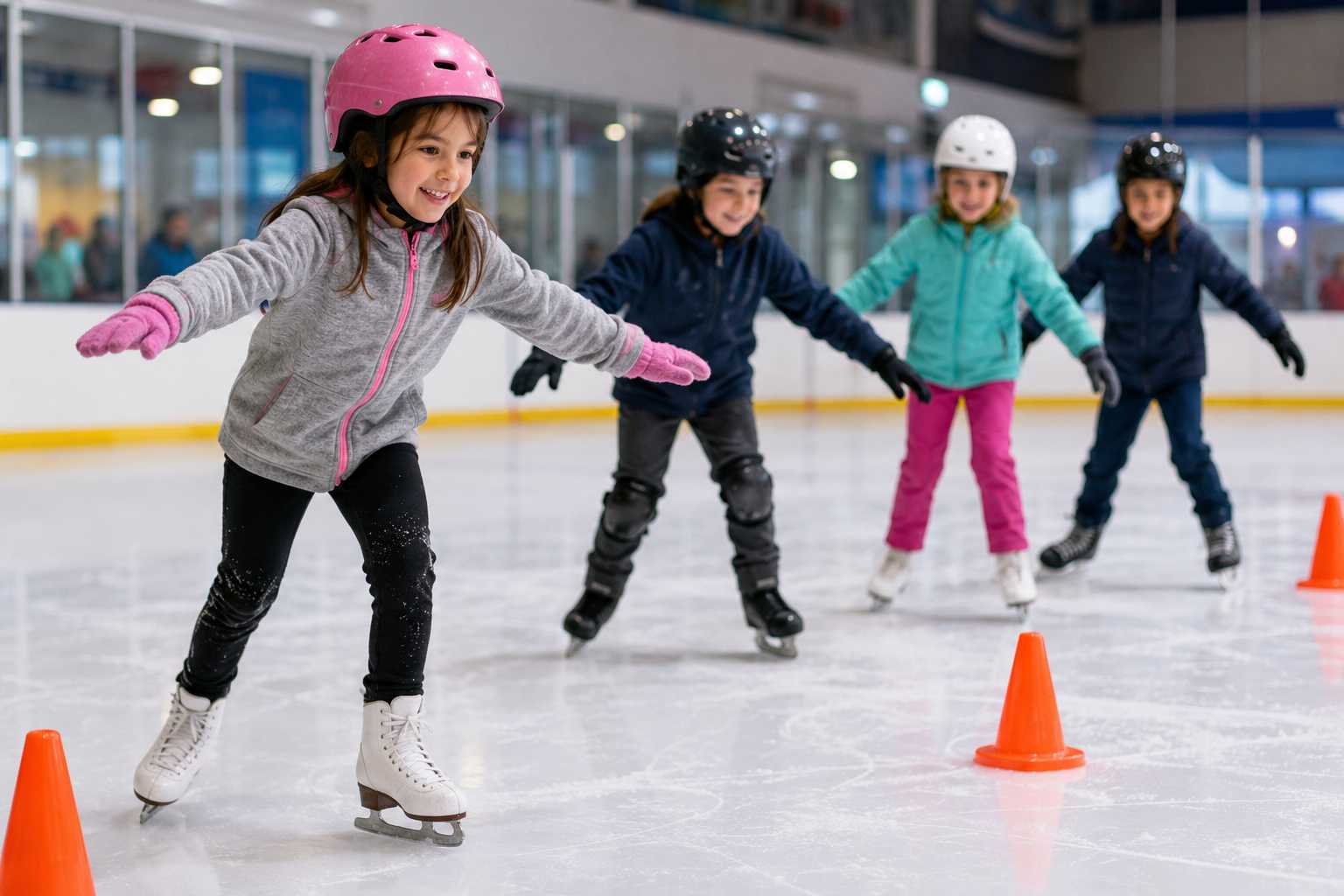
Learn to Skate Summer Camp at Poway ICE is a five-day skating camp created for recreational skaters at the Snowplow and Basic Skills levels. The camp includes 20 hours of skating and camp activities across the week. It is designed for skaters who want to build stronger fundamentals, try more challenging skills, and experience parts of competitive skating training in a camp format.
The camp is a good fit for children who are learning to skate and are ready for a more concentrated experience than a weekly class. Brand-new skaters ages 3–5 are directed to Snowplow 1, while brand-new skaters ages 6–16 are directed to Basic 1. Skaters who already take Learn to Skate classes should register based on their most recent evaluation or one level above their current class.
The atmosphere is skill-focused but still playful. Campers move through off-ice warm-up, on-ice skill work, pre-jumps and pre-spins, games, free-skate breaks, cool-down, and flexibility work. That balance gives children time to practice, rest, and try new elements without spending the entire afternoon doing one thing.
This camp will likely interest kids who like ice skating, movement, music, games, and the feeling of improving a little each day.
| Ages: | 3–16 |
| Type: | Day |
| Month: | Summer |
| Gender: | Co-Ed |
| Setting: | City |
| Sports: | Sports, Winter Sports, Ice Skating |
You won’t be charged yet. The camp will contact you to confirm all terms first.
| Dates | Days | Price | Apply |
|---|---|---|---|
| Jun 22 - Jun 26, 2026 | 5 | $700 |
Learn to Skate Summer Camp combines skating fundamentals with more advanced introductory elements. Campers work on basic skating skills first, then try power skating, edges, pre-jumps, pre-spins, games, music interpretation, choreography, strength, and flexibility. The program is designed for recreational skaters, so it keeps skill-building at the center while still giving campers fun movement breaks. The sample schedule mixes off-ice and on-ice blocks, which helps children prepare their bodies before skating and cool down afterward.
Learn to Skate Summer Camp is a day camp held at Poway ICE. Campers attend in the afternoon and return home after check-out. The program does not include overnight lodging, cabins, dorm rooms, or residential supervision.
The listed camp runs Monday through Friday from 12:00 p.m. to 4:00 p.m. The sample schedule begins with skater welcome and check-in from 11:45 a.m. to 12:15 p.m., followed by off-ice warm-up, skating time, breaks, games, cool down, packing up, and check-out.
Because this is an ice rink-based camp, families should plan for daily transportation and enough time before camp for arrival, check-in, and getting settled. Campers also need to dress for both rink conditions and off-ice movement. Layers, gloves or mittens, thin socks above the ankle, and pants that allow movement are recommended.
The camp is best for families who want a structured afternoon skating program rather than a full-day or overnight camp.
The camp runs in the afternoon, from 12:00 p.m. to 4:00 p.m. Families should plan lunch before arrival so skaters begin camp ready to move.
The sample schedule includes two break blocks labeled for bathroom, snack, and free skate time. These breaks give campers a reset between foundational skating skills, pre-jumps, pre-spins, on-ice games, and off-ice cool down work.
Because skating is active and the rink environment can feel cold, campers should come prepared for comfort during both movement and rest periods. A simple snack that is easy to eat during break time can help children keep their energy up through the afternoon.
The camp schedule centers on skating and training rather than a meal period. The rhythm is check-in, warm-up, skating instruction, short breaks, games, stretching, and check-out.
Poway ICE provides clear guidance on clothing and equipment for Learn to Skate participants. Skaters should dress in layers, wear pants that allow movement, bring gloves or mittens, and wear thin socks that reach above the ankle so their skates fit snugly. Waterproof gloves are recommended for extra protection.
Helmets are very strongly recommended. For younger skaters, snow pants can help keep them dry while they are still finding their balance on the ice.
Skate fit is also part of safe skating. Skates should fit very snugly because skates that are too big make it harder to balance. Beginning skaters are encouraged to start in figure skates because the longer, flatter blades provide more stability when learning.
The facility’s conduct rules ask skaters, guests, and spectators to follow posted rules, signs, warnings, and policies, and to cooperate with staff. Respectful behavior is expected toward skaters, spectators, officials, coaches, and staff.
The camp schedule includes bathroom and snack breaks during the afternoon, plus an off-ice cool down, stretching, and flexibility block before check-out. This helps break up the skating time and gives campers a chance to reset after active on-ice work.
Clothing is important for comfort and injury prevention. Campers should wear layers, gloves or mittens, thin socks above the ankle, and pants that allow movement. Helmets are strongly recommended, especially for children who are still building balance and confidence.
The sample schedule also includes off-ice strength work, warm-up, stretching, and flexibility. These elements help prepare skaters before they go on the ice and cool them down before they leave.
The facility rules require skaters to follow posted safety policies and cooperate with staff. Parents should also choose the correct class level during registration so children are placed in a group that matches their current ability.
Learn to Skate Summer Camp has a clear rink-camp rhythm. Campers begin with welcome and check-in, warm up off the ice, lace up skates, practice skills, take breaks, play on-ice games, cool down, and check out. That routine makes the afternoon predictable for newer skaters while still keeping the program varied.
The camp also gives children a taste of figure skating training beyond basic class time. Campers work on power skating, edges, pre-jumps, pre-spins, music interpretation, choreography, off-ice strength, yoga, stretching, and cool down. For many recreational skaters, that mix can feel like a first step into a more serious skating world.
Games are part of the tradition too. The sample schedule includes on-ice games, free skate time during breaks, and skill blocks that make practice feel more playful.
The camp’s biggest tradition is progression: skaters arrive at their current level and spend the week building skills, confidence, and comfort on the ice.
Training levels offered are Snowplow 1–4, Basic 1–6, and Adult Low–High.
Brand-new skaters ages 3–5 should register for Snowplow 1.
Brand-new skaters ages 6–16 should register for Basic 1.
Skaters already enrolled in the Poway ICE Learn to Skate Program should register for the next recommended level from their most recent evaluation or one level higher than their current enrollment.
Current Poway ICE Learn to Skate participants receive priority registration before registration opens to all guests.
Skaters should dress in layers, bring gloves or mittens, wear thin socks above the ankle, and use snug-fitting skates.
Helmets are very strongly recommended.


