
Camp Info
| Ages: | 11–18 |
| Type: | Day, Overnight |
| Month: | Summer |
| Gender: | Co-Ed |
| Setting: | City |
| Lodging: | Dorm |
| Academics: | Academics, Career, Law, Life Skills, Debate, Public Speaking |


Stanford, CA, USA
Mock Trial is a one-week program for students entering grades 9–12 who want to build public speaking skills through the structure of the American legal system. It is designed for both newcomers and more experienced competitors, with an emphasis on persuasive reasoning, courtroom communication, and advocacy fundamentals rather than high-pressure tournament tactics. That makes it a strong option for students who are curious about law, debate, or performance but may not want a purely competitive environment.
Throughout the week, students work on an age-appropriate legal case designed to be balanced, challenging, and accessible. The program introduces the structure of court systems, the differences between civil and criminal procedure, and the basics of forming and presenting convincing legal arguments. Campers also gain exposure to constitutional, criminal, and tort law, as well as the rules of evidence, which makes the week feel more substantial than a simple speaking workshop.
One of the camp’s biggest strengths is that it blends legal content with repeated speaking practice. Students work on opening statements, witness examinations, the introduction of evidence, and closing arguments. Past sessions have also included simulated client interviews, professionally critiqued oral arguments, courthouse visits, and guest speakers such as attorneys and judges. This camp will appeal most to teens who like structured thinking, persuasive speaking, and the challenge of arguing from evidence. It is also a good fit for students interested in law, government, or trial-style advocacy who want a more immersive campus-based program.
| Ages: | 11–18 |
| Type: | Day, Overnight |
| Month: | Summer |
| Gender: | Co-Ed |
| Setting: | City |
| Lodging: | Dorm |
| Academics: | Academics, Career, Law, Life Skills, Debate, Public Speaking |
You won’t be charged yet. The camp will contact you to confirm all terms first.
| Dates | Days | Price | Apply |
|---|---|---|---|
| Jul 12 - Jul 18, 2026 | 7 | $2,985 | |
| Jul 12 - Jul 18, 2026 | 7 | $3,495 | |
| Jul 12 - Jul 26, 2026 | 15 | $4,865 | |
| Jul 12 - Jul 26, 2026 | 15 | $5,675 | |
| Jul 19 - Jul 24, 2026 | 6 | $2,095 | |
| Jul 19 - Jul 24, 2026 | 6 | $2,495 | |
| Jul 19 - Jul 24, 2026 | 6 | $2,985 | |
| Aug 2 - Aug 7, 2026 | 6 | $2,095 | |
| Aug 2 - Aug 7, 2026 | 6 | $2,495 | |
| Aug 2 - Aug 7, 2026 | 6 | $2,985 |
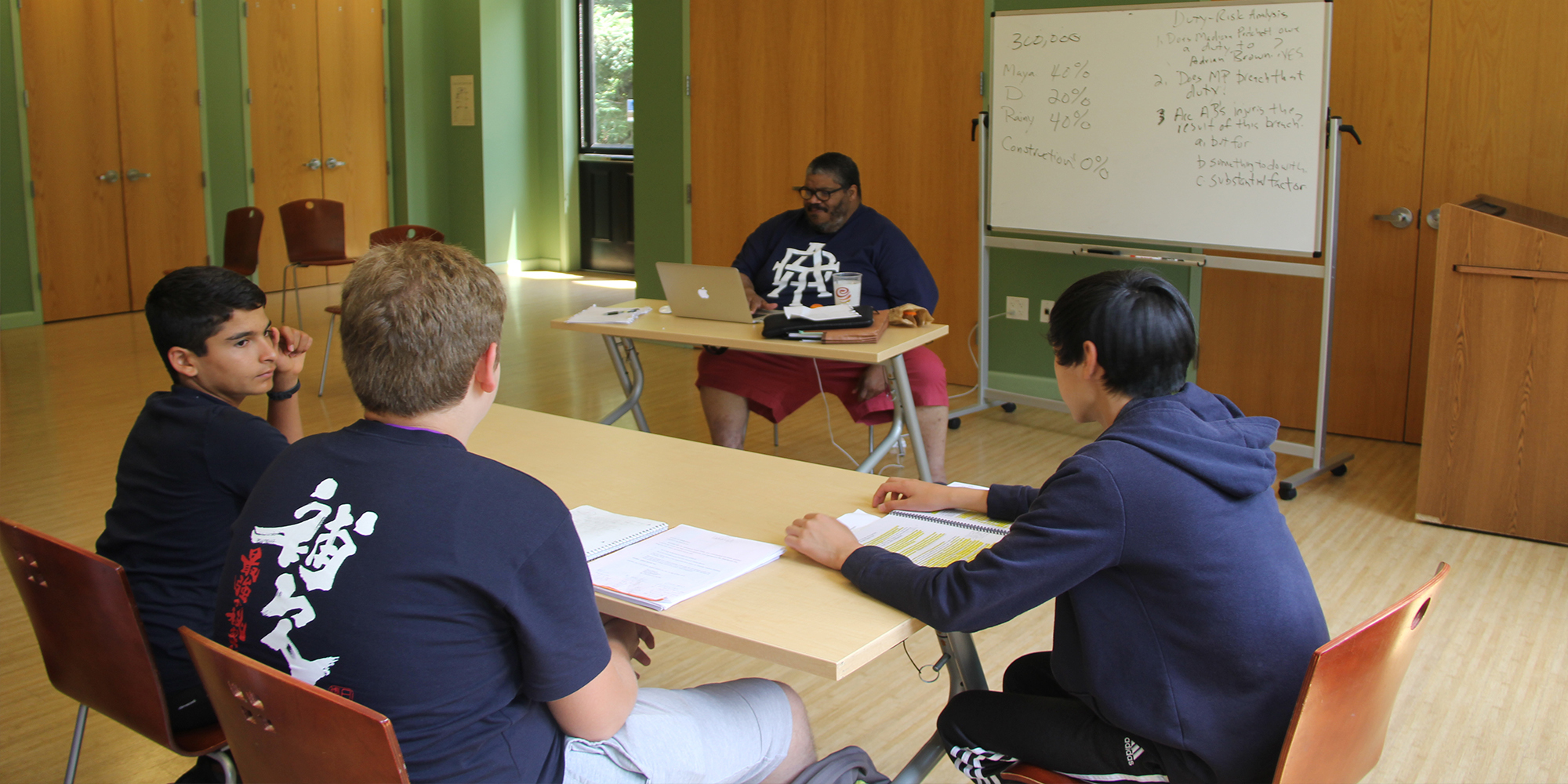
The program is built around learning by doing. Students spend the week working through a legal case while also learning how the American judicial system functions. The teaching approach combines legal content, public speaking, and simulated courtroom performance, so campers are constantly moving between understanding the law and using it in practice.
Students begin with the structure of the courts and the differences between civil and criminal procedure. They also get exposure to basic legal concepts in constitutional law, criminal law, tort law, and evidence. That gives the camp an academic backbone, but the program does not stop there. Students apply what they learn by building legal arguments and presenting them in a courtroom setting.
The speaking side of the camp is a major draw. Campers work on opening statements, examination of witnesses, introduction of evidence, and closing arguments. These are some of the most important and demanding parts of trial advocacy, and practicing them helps students build poise, clarity, and confidence under pressure. Past activities have also included simulated client interviews, courthouse visits, and professionally critiqued oral arguments, which help the camp feel more connected to real legal practice.
The week includes at least two mock trials and builds toward a full-length mock trial exhibition at the end. That final performance gives students a reason to keep refining their work instead of treating each exercise as separate. For teens who enjoy law, argument, or performance, this structure makes the camp feel focused, active, and rewarding.
Students can attend Mock Trial as extended day campers or overnight campers. Overnight campers stay on campus in student dormitories, which gives the experience a more immersive feel and keeps students connected to the full rhythm of camp life. These are university residence halls rather than hotel-style accommodations, so the setup feels closer to a supervised pre-college stay.
Most available dorm rooms are doubles, so campers usually share with one other same-sex student. The program tries to accommodate single-room and triple-room requests when possible, but no specific room arrangement is guaranteed. Students of the same gender can also make mutual roommate requests in advance, which may help if friends want to attend together.
The residential setup is structured and supervised. The dorms are described as secure, with key access required to enter the outer doors and the interior of the building. Dorm floors are separated by sex, and same-sex camp staff live on the floors with campers. The Camp Director and Assistant Director also stay in the dormitory for the full session. For families considering the overnight option, that setup gives the campus experience a more supervised and age-appropriate feel.
Meals depend on the attendance format. Overnight campers begin the day with breakfast in the dining hall, and the sample schedule shows lunch and dinner included for all campers. That means extended day students also stay for both midday and evening meals, which helps them remain part of the full program instead of leaving campus before the day is really over.
The meal structure supports the camp’s long, immersive rhythm. Students move from trial structure class into lunch, afternoon instruction, dinner, electives, and evening recreation, which makes the day feel continuous and well-organized. For many teens, that kind of schedule can be a big part of the appeal. It feels more like a full residential institute than a short local class.
For dietary needs, families need to work directly with campus dining services. The program can connect families with the appropriate dining hall contact, but arrangements for allergies or dietary accommodations are handled between the family and the university dining team. The campuses are generally described as accommodating many common dietary restrictions and allergies.
The camp uses a structured supervision model across both instructional time and residential life. Education Unlimited says its camps average about a 1:12 instructor-to-student ratio, though some classes may be somewhat larger depending on the activity and the instructor. That helps keep instruction interactive while still giving campers room to work in groups and practice courtroom roles.
For overnight campers, supervision continues after class. Same-sex staff members live on the dorm floors with campers, and regular roll calls are part of the routine. Roll is taken each morning, before meals, and before classes or activities.
The program also states that background checks are conducted on every employee at the time of hire and annually thereafter. Counselors generally help lead recreation and provide additional supervision, while instructors are selected for subject knowledge and their ability to work well with students.
A deposit is required at application.
A $300 security deposit is required for both day and overnight campers.
Remaining balances are generally due 45 days before camp.
Payments are generally nonrefundable after enrollment unless the Tuition Protection Plan is purchased at the initial application.
The Tuition Protection Plan costs 10% of the total program cost, must be purchased when applying, and does not provide refunds after camp begins.
Most dorm rooms are doubles, but no specific room configuration is guaranteed.


