
Camp Info
| Ages: | 11–18 |
| Type: | Day |
| Gender: | Co-Ed |
| Setting: | Coast |
| Water: | Water, Boating, Rowing |
| Time: |
|

San Diego, CA, USA
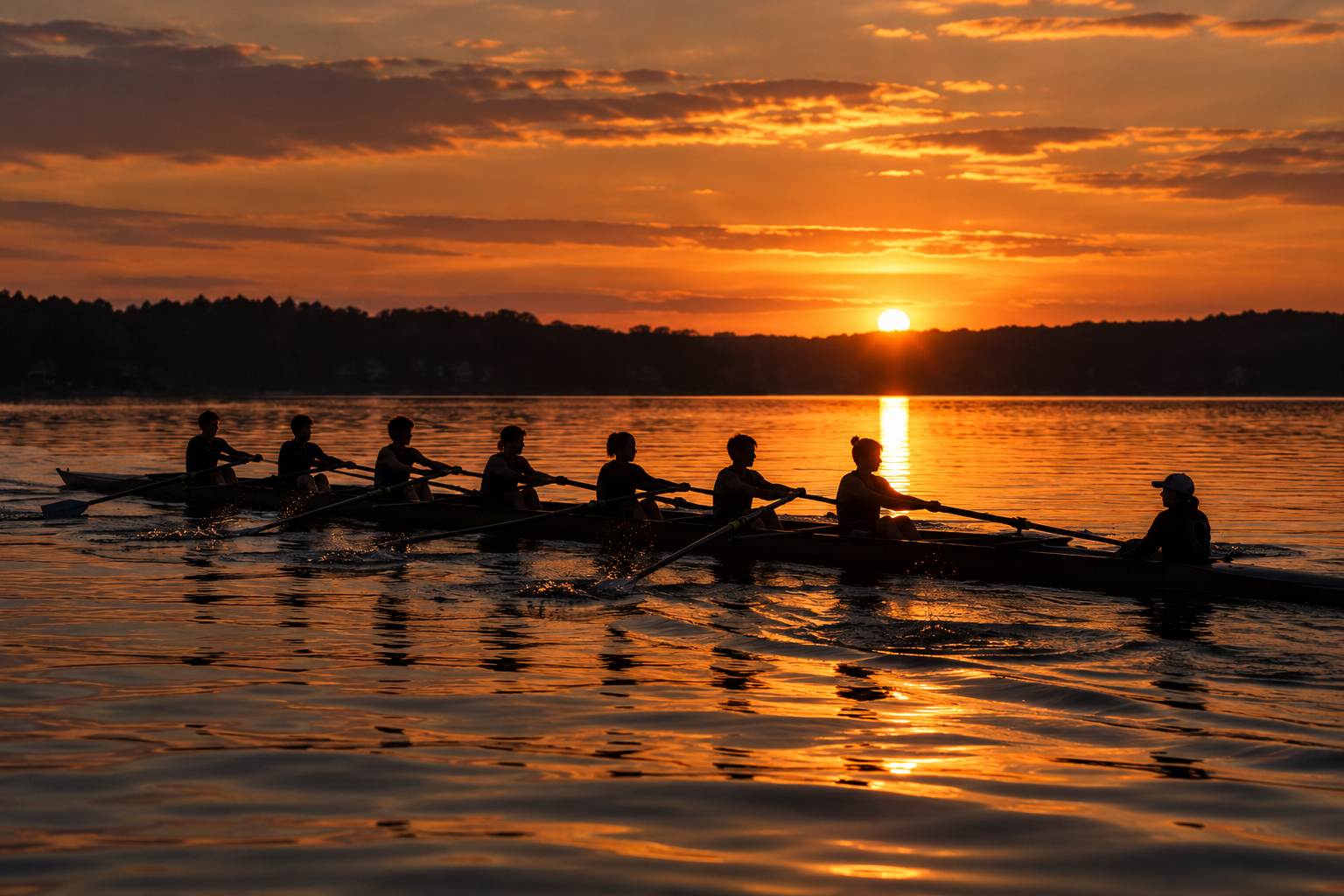
A first rowing stroke starts on land before campers take a single-person boat onto Mission Bay. San Diego Rowing Camp introduces middle and high school students to the sport through morning instruction at the San Diego Rowing Club. Beginners practice the basic movements on rowing machines, then build their feel for the water in individual boats.
The program serves students in grades 6–12, with separate groups for grades 6–8 and 8–12. Eighth graders can choose either group. Learn to Row camps welcome newcomers, while Intermediate camps give graduates a way to continue developing technique and explore team rowing. Depending on their progress, participants may try boats with four or eight rowers.
The waterfront boathouse gives the program a practical connection between land training and on-water practice. This is a focused introduction for students curious about rowing, with a continuing pathway for those interested in joining a junior team.
| Ages: | 11–18 |
| Type: | Day |
| Gender: | Co-Ed |
| Setting: | Coast |
| Water: | Water, Boating, Rowing |
| Time: |
|
You won’t be charged yet. The camp will contact you to confirm all terms first.
You can still submit a quick request to let the camp know you’re interested.
Learn to Row camps cover the foundations of the stroke through rowing-machine practice and time in single-person boats. Coaches begin a typical day with a warm-up and land-based technique work before the group heads onto the water. Larger team boats may be introduced as the group progresses.
After completing a beginner camp, participants can join Intermediate camps to practice more advanced technique and row different types of boats. These sessions place more emphasis on four- and eight-person crews and the teamwork involved in rowing together.
Both pathways use grade-based groups. The younger group moves at a slower pace, while the older group can progress more quickly. Eighth graders interested in competitive rowing are encouraged to choose the older group. Intermediate participants can attend multiple sessions to continue practicing.
| Program | Days | Hours |
|---|---|---|
| Learn to Row | Monday–Friday | 09:00 AM - 11:00 AM |
| Intermediate | Monday–Friday | 08:30 AM - 10:30 AM |
Each camp runs for one week. A typical day begins with a warm-up and rowing-machine practice before on-water rowing.
Morning supervision does not extend beyond 15 minutes before or after camp. Families should keep arrival and pickup within those limits. Rowers should wear fitted athletic clothing because loose fabric can catch in equipment.
On Mission Bay, rowers follow the club’s traffic pattern and weather precautions. Rowing is avoided during thunder and lightning, whitecaps, or poor visibility. Water-quality advisories and recent heavy rain can also affect on-water activity.
Rowers should stay home when sick, wash their hands regularly, and avoid sharing water bottles. Open cuts and scrapes should be kept out of Mission Bay water and cleaned with soap and clean water.
Guillermo Lemus leads the Juniors Program. Camp participants work with coaches during rowing practice, and families should let their coach know when an athlete needs to miss a day.
Families can direct summer camp and registration questions to the Juniors Program Director. If a participant needs to miss a day, the family should let the coach know so the session can be planned accordingly.
Bring athletic shoes, a water bottle, a hat, sunglasses, sunscreen, and clothing suited to the weather. Athletic clothing should fit closely enough to avoid catching in rowing equipment. Water bottles can stay with participants during practice, and refill stations are available in the boathouse. Day lockers are available on a first-come basis; valuables should stay at home. Arrive no more than 15 minutes early and arrange pickup within 15 minutes of the end of camp.


