
Camp Info
| Ages: | 3–18 |
| Type: | Day |
| Gender: | Co-Ed |
| Setting: | City, Coast |
| Water: | Water, Surfing |
| Health: | Health, Wellness, Therapy, Special Needs, At-Risk |
| Meals Type: | Provided |
| Time: | 08:00 AM - 02:00 PM |
| Staff to Сamper Ratio: | 1:1 |

San Diego, CA, USA
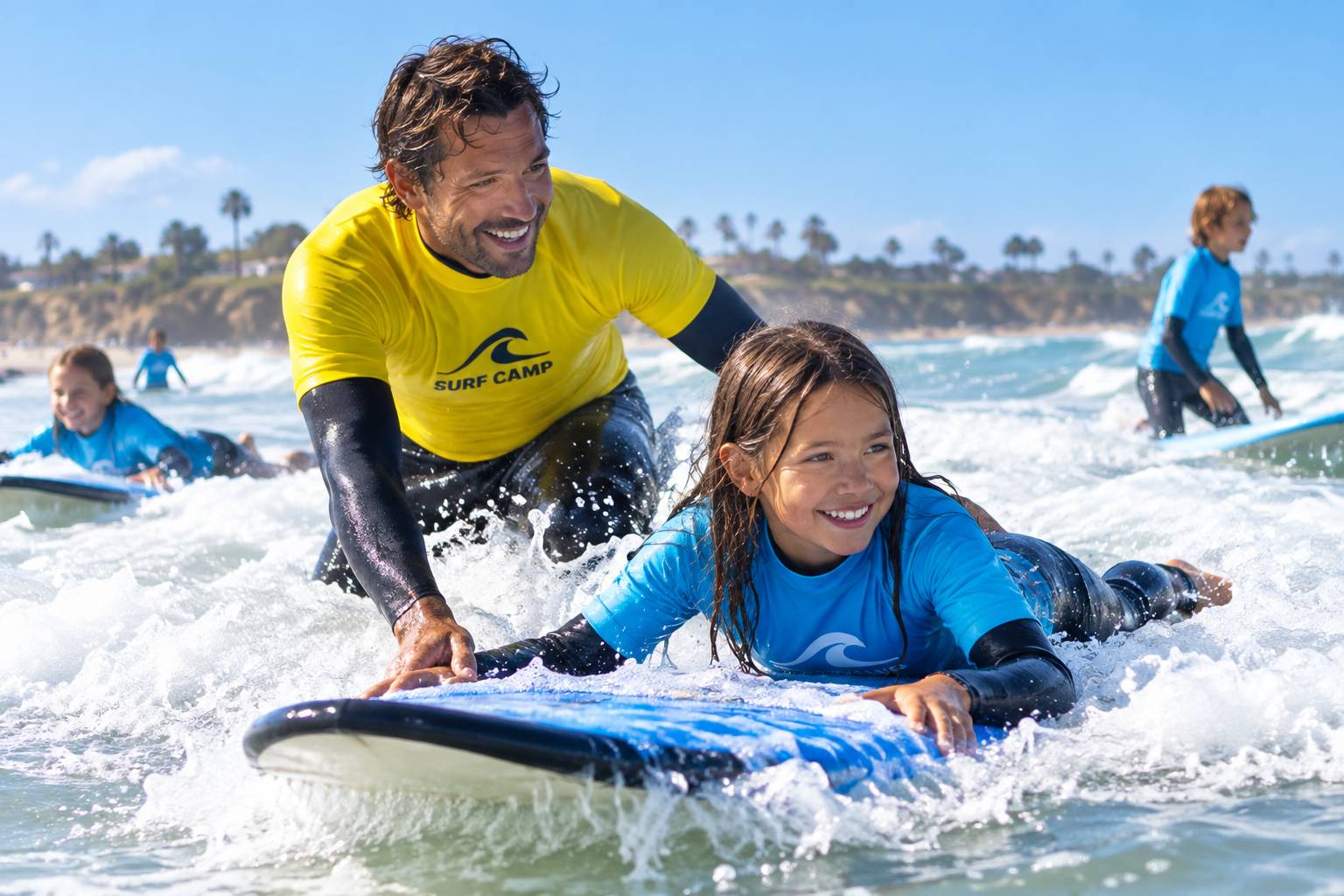
Ocean time is the center of the experience, with youth learning to surf alongside a dedicated adult mentor in a structured beach day. Urban Surf 4 Kids serves children and teens ages 3–18 from foster, kinship, adoptive, and at-risk communities. Surf therapy is paired with recreation, mentoring, and practical activities that help participants spend time outdoors, try something new, and connect with supportive adults and peers.
A typical camp day includes check-in, land-based surf instruction, stretching, two hours of surf and beach activity time, lunch, presentations, recreation, and a beach cleanup. Children who do not want to surf can join on-land sports and recreational activities instead of water time. Each surf therapy camp also includes a sustainability focus through Leave No Trace practices and encouragement to reduce single-use plastics. Camps are themed and often involve community partners, volunteer groups, and speakers.
Safety is built into the water program through a 1:1 volunteer-to-youth pairing for surfing. Staff are CPR and First Aid certified, and lifeguards are trained water professionals. Lunch, fresh fruit, and nutritious snacks are provided during the day. The format is especially well suited to children who enjoy active outdoor experiences, ocean-based activities, mentoring, and a mix of physical recreation and community participation.
| Ages: | 3–18 |
| Type: | Day |
| Gender: | Co-Ed |
| Setting: | City, Coast |
| Water: | Water, Surfing |
| Health: | Health, Wellness, Therapy, Special Needs, At-Risk |
| Meals Type: | Provided |
| Time: | 08:00 AM - 02:00 PM |
| Staff to Сamper Ratio: | 1:1 |
You won’t be charged yet. The camp will contact you to confirm all terms first.
You can still submit a quick request to let the camp know you’re interested.
The camp is organized as a single beach-based day with a clear sequence from arrival through afternoon cleanup. Youth arrive for registration, caregiver check-in, pre-surf surveys, and gear preparation before joining land-based surf instruction and stretching. The main water block runs from late morning to noon, when participants surf and take part in beach activities with adult mentors. Youth who choose not to surf can stay on land with the activities and recreation team for sports and other beach-based recreation.
After the water session, participants move into lunch and post-surf surveys, followed by presentations and additional activities. The final part of the day includes a beach cleanup, connecting the recreation program with the organization’s Leave No Trace and sustainability practices. Surf camps are themed and often involve community partners, volunteers, and speakers. The program combines surfing with mentoring, outdoor recreation, practical environmental habits, and time for youth to connect with a consistent volunteer community.
For in-water surfing, the program aims for a 1:1 pairing between a youth athlete and an adult volunteer. CPR and First Aid-certified staff and trained lifeguards support the water environment.
| Time | Activity |
|---|---|
| 9:00 AM | Youth arrival, registration, caregiver pre-surf surveys, and gear preparation |
| 9:30 AM | Announcements, land surf instruction, and stretching |
| 10:00 AM - 12:00 PM | Surf time and beach activities |
| 12:00 PM - 1:00 PM | Post-surf surveys and lunch |
| 1:00 PM | Presentations and activities |
| 1:30 PM - 2:00 PM | After-lunch beach cleanup |
Lunch is provided during the surf therapy camp day. The food program includes a sandwich for each child, chaperone, and volunteer, along with fresh fruit and nutritious snacks. Lunch is scheduled after the main surf and beach activity block, giving participants a break before presentations and afternoon activities. The camp also encourages youth and volunteers to bring reusable water bottles and reduce single-use plastics as part of its sustainability practices.
In-water surfing uses a one-to-one pairing between a youth athlete and an adult volunteer, with the number of participating youth tied to available in-water volunteers. Staff are CPR and First Aid certified, and lifeguards are described as skilled, certified, and trained water experts. Participants are also expected to follow the program’s Code of Conduct, which prohibits behavior that endangers the safety, health, or well-being of others.
Staff supporting the surf therapy camps are CPR and First Aid certified. Trained lifeguards are part of the water-safety team during surf activities.
Surf therapy camps rely on a large volunteer team and a dedicated program staff. During surfing, an adult volunteer is paired one-to-one with a youth athlete for in-water instruction. Staff are CPR and First Aid certified, while lifeguards are skilled, certified, and trained water experts. A Surf Therapy Camp Coordinator manages event communication and camp details, and separate volunteer teams support registration, wetsuits and rash guards, recreation, food service, setup, and teardown. Volunteers arrive before youth participants so registration, water instruction, gear support, recreation, and food service are ready for the camp day.
Caregivers use the email address provided during sign-up to receive additional camp details. Event information is sent during the week of the camp, and the Surf Therapy Camp Coordinator is the main contact for camp questions. Registration pages also collect caregiver contact details so the team can communicate about participation and event logistics. Sign-up forms are generally opened about one month before each scheduled event.
Surf Therapy Camps at La Jolla Shores run as day events, with the published event window from 8:00 AM to 2:00 PM and youth arrival at 9:00 AM. Check-in includes registration, caregiver and youth pre-surf surveys, and preparation for the water session. Sign-up forms generally open about one month before each event. Participants are encouraged to bring reusable water bottles. Children who prefer not to surf can register for on-land recreation instead of water activities.
Surf lessons are offered free of charge as part of the Surf Therapy Camp program.


